



The Challenge
Noise had built a massive catalog of 15,000+ products from smartwatches to earbuds and fitness trackers. But as the catalog grew, finding the right product became harder for shoppers.
The numbers told a troubling story:
1 million monthly visitors, but most left within seconds
95% of visitors were anonymous, offering no clues about their preferences
High bounce rates as visitors, overwhelmed by choice, simply gave up
Conversion rates stagnating despite continuous product launches
While competitors chased 10-minute delivery, Noise had a bigger challenge: helping visitors find the right product in under two minutes before they left.
The team knew incremental fixes wouldn’t work. They needed to turn their static webstore into an intelligent concierge that understood each visitor’s context.
Helium’s Solution
Helium’s approach was different. Instead of asking visitors to fill out preference forms or create profiles, it observed and learned from their digital fingerprints in real time.
Every visitor left subtle clues:
City and weather patterns, someone in Mumbai during monsoon season likely needs water-resistant earbuds
Device type and recency, an iPhone 15 user has different expectations than someone on a 3-year-old Android
Traffic source, paid ad clicks versus organic search reveal purchase intent
Visit history, first-time browsers behave differently from repeat visitors
Session behavior, what they click, how long they linger, what they ignore
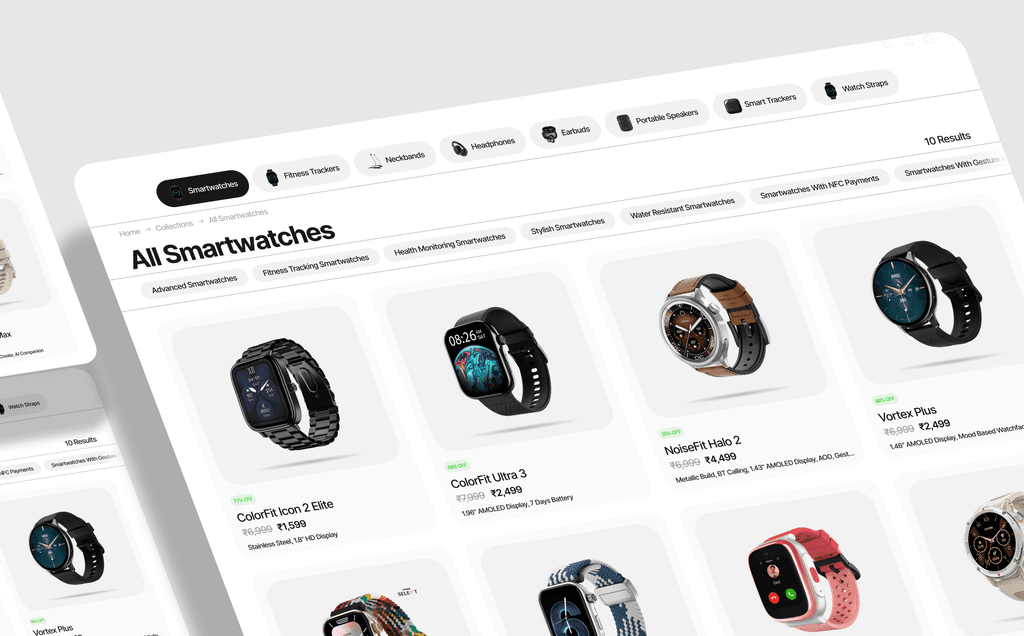
Helium processed these signals in real time to create a unique journey for each visitor showing Jai - premium smartwatches, Isha - budget-friendly aesthetic options, and Arjun - fitness trackers.
Adaptive Product Curation
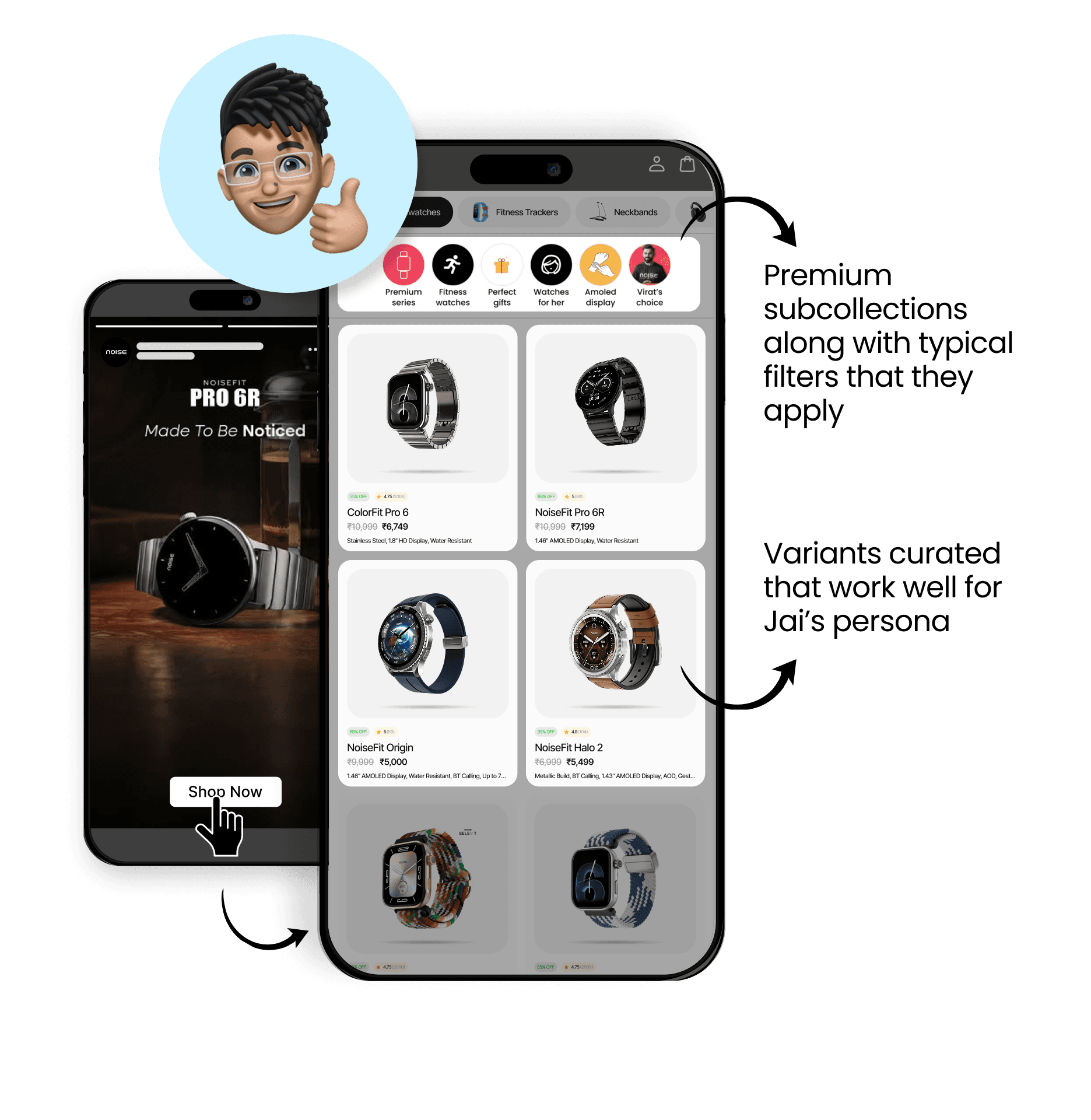
Remember Jai, the Instagram clicker? When he returned after Helium, the experience changed.
Based on his preferences, device, location, and behavior, the site instantly surfaced smartwatches in his price range, highlighted commute-friendly features, and prioritized water-resistant options. Meanwhile, Mary saw a completely different view value-driven products with clear pricing, discounts, and EMI options.
The result: a 50% reduction in bounce rates as visitors immediately saw what mattered to them.
Contextual Product Pages
Finding the right product was only the first step. The next challenge was showing why it was right.
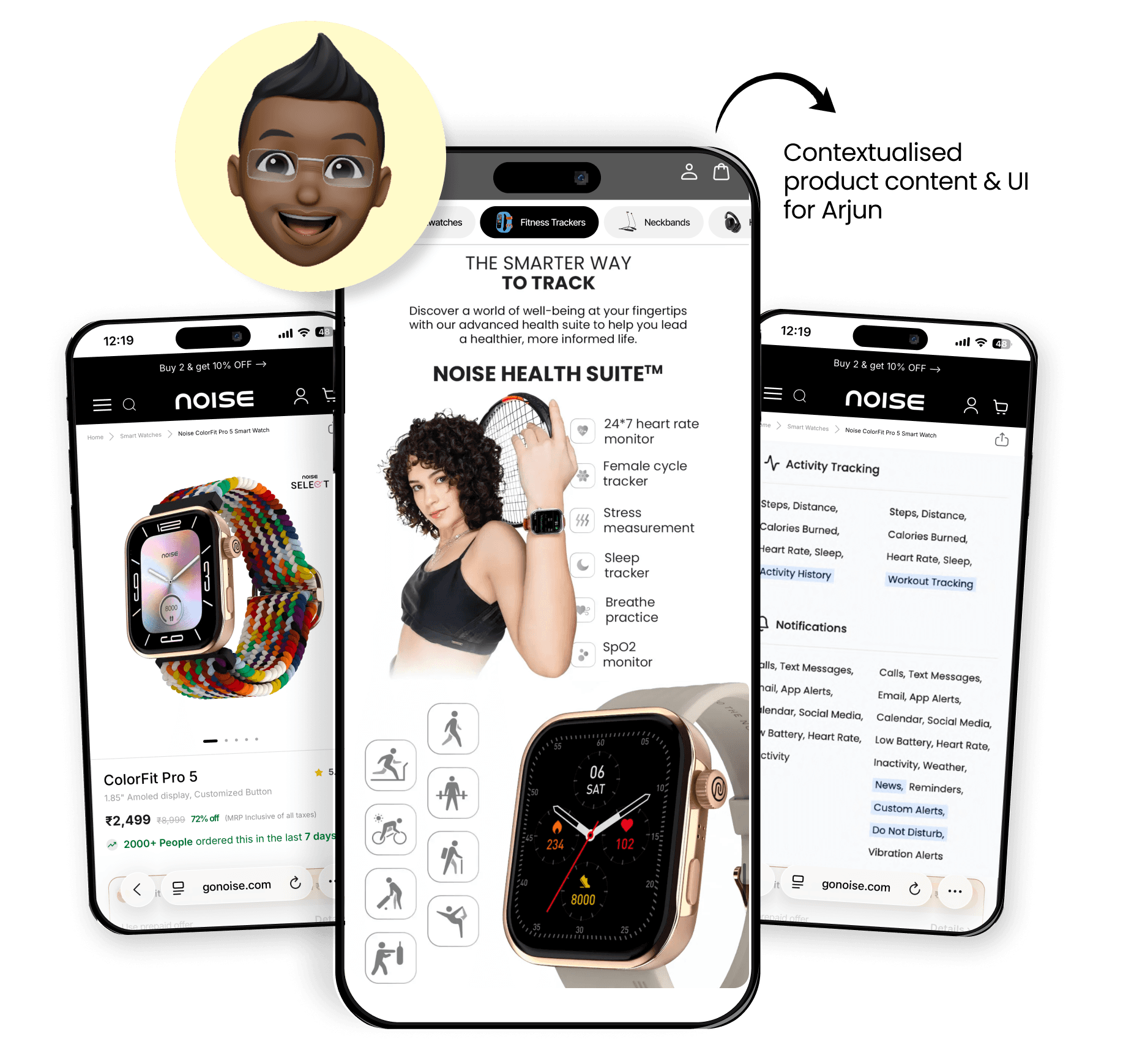
When Arjun clicked a fitness tracker, the product page adapted in real time. Specs were replaced with runner-relevant benefits app integrations, battery life for long runs, and gait compatibility. Visuals shifted from generic shots to outdoor scenes, and comparisons focused on what fitness enthusiasts actually care about.
The result: a 13% lift in conversions as visitors got clear answers to “Why is this right for me?”
Smart Upsells That Feel Like Recommendations
Traditional ecommerce relies on “frequently bought together.” Helium went further by understanding why a shopper might want something.
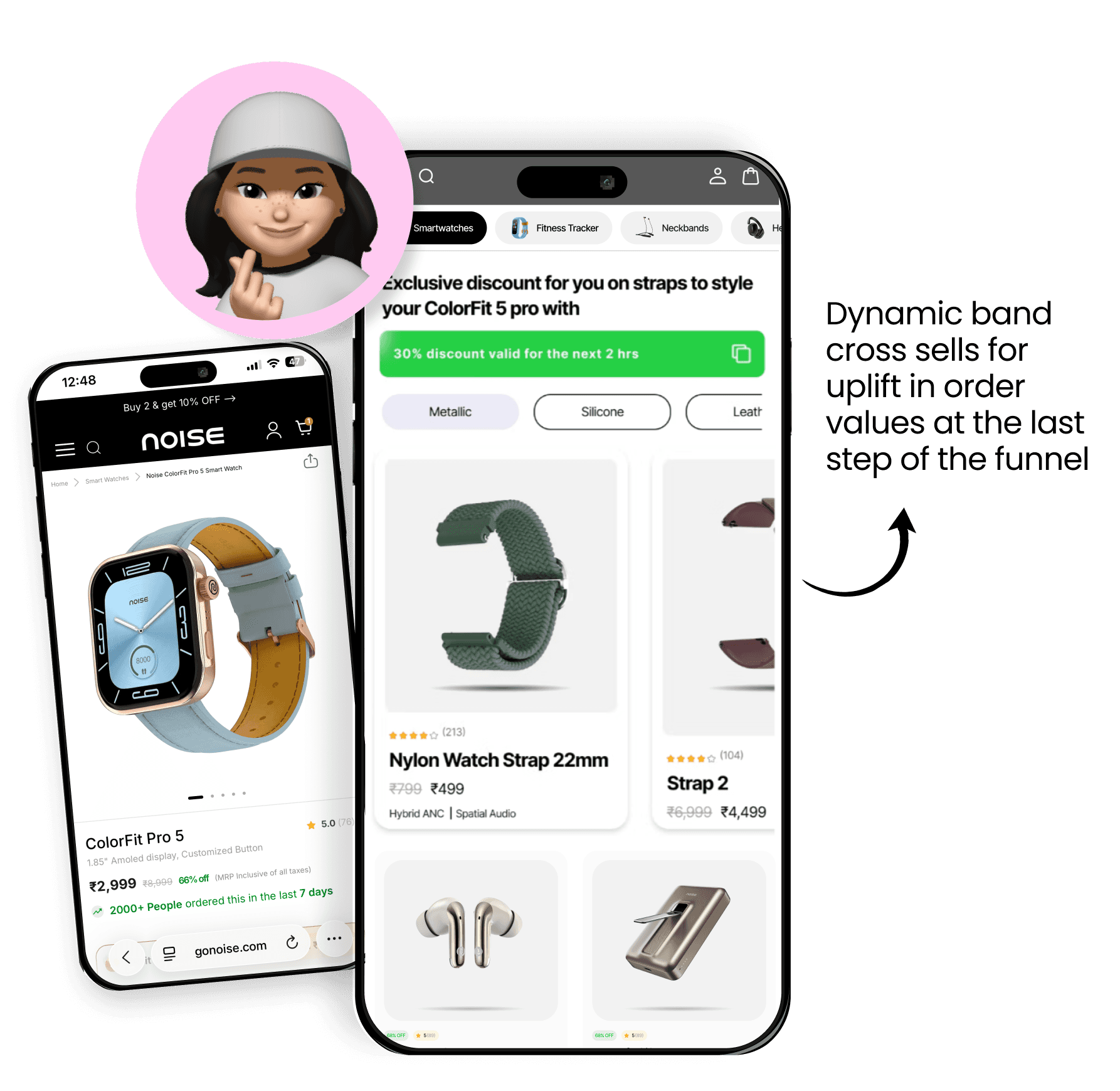
When Isha added a smartwatch to her cart, Helium curated a trendy lifestyle bundle: rose gold wireless earbuds perfect for Instagram-worthy study sessions, a minimalist power bank that looks great on desk, and a silicone strap featured in recent trends, all within a student-friendly price range.
The result: a 12% increase in average order value through intent-led recommendations.
The Technical Magic: How It Actually Works
Behind the seamless experience was an AI engine working in milliseconds.
Real-time signals
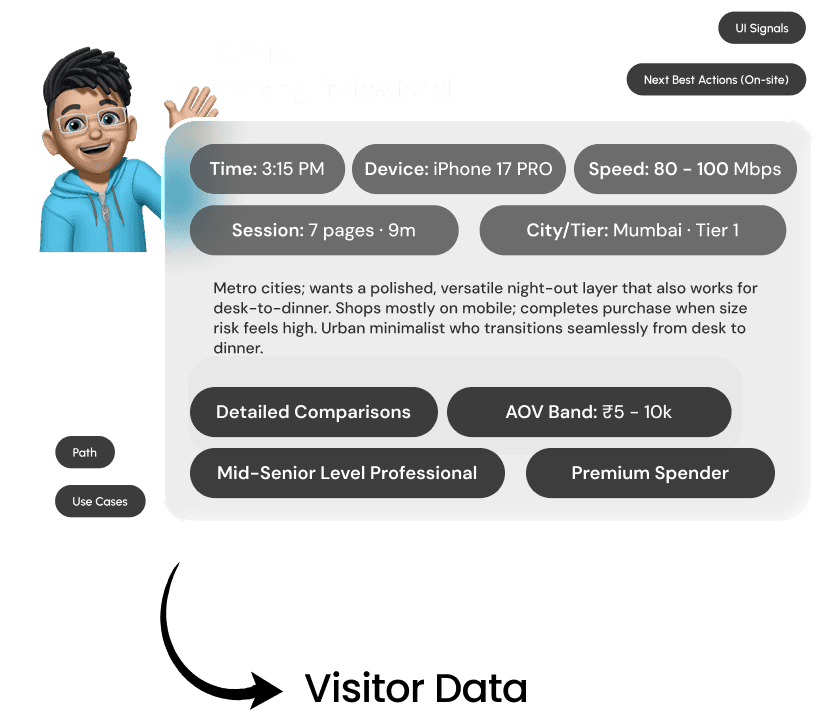
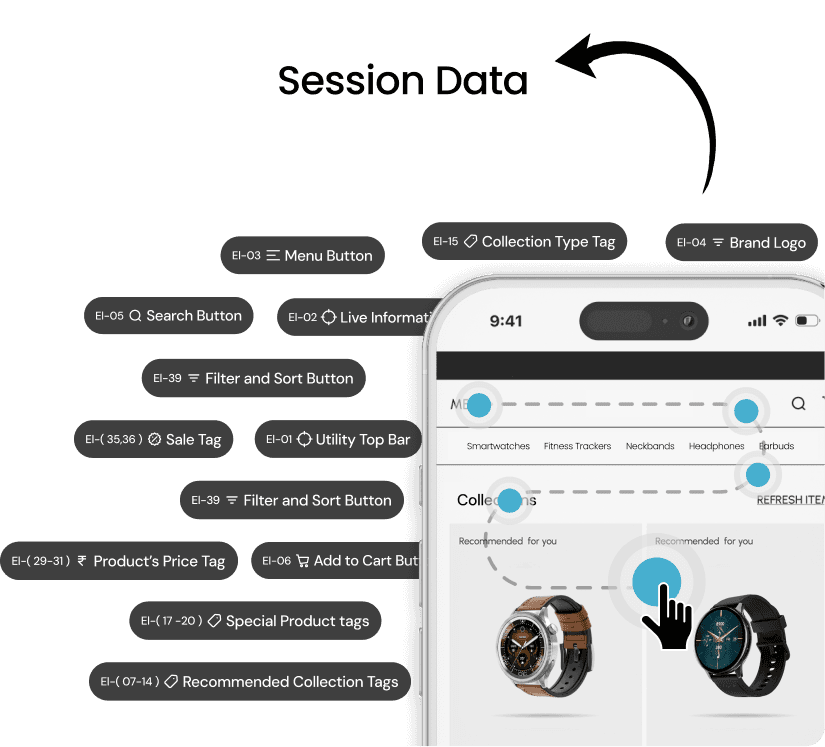
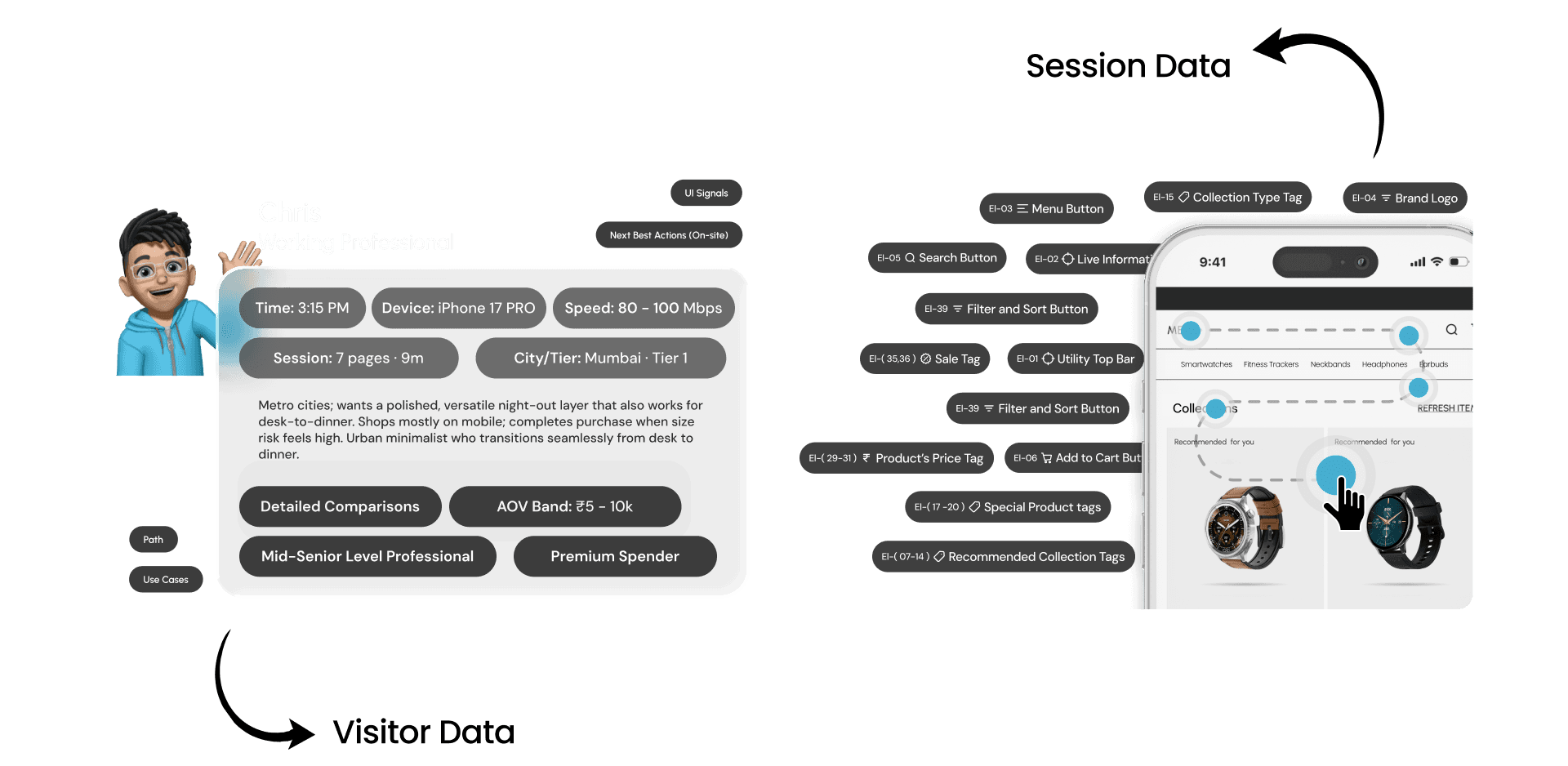
The moment a visitor landed, Helium read device, location, traffic source, time of day, and past behavior to infer intent.
Progressive learning
As visitors interacted, Helium refined its understanding - clicks, hovers, and scrolls continuously shaped the experience.
Attribute-led recommendations
Instead of generic “similar products,” Helium surfaced products based on what mattered most, like battery life, design, or price.
Numbers That Tell the Story
Six months after implementing Helium, Noise’s webstore evolved from a digital catalog into an intelligent shopping companion.
Impact metrics:
Bounce rate: 30% lower
Conversion rate: 25% higher
Average order value: 12% increase
Time to purchase: under 2 minutes
Not only this, First-time visitors behaved like informed buyers, product pages felt like conversations, not spec sheets. Cart abandonment dropped as confidence grew & shoppers felt understood not sold to.
25%
Conversion Uplift
12%
Increase in AOV
30%
Lower bounce rate
The Bigger Picture
Noise’s success proves a simple truth. Personalisation isn’t a feature. It’s the foundation of modern e-commerce. Shoppers no longer want generic storefronts. They expect relevance and experiences that respect their time.
Helium didn’t just increase sales. It transformed shopping into something that felt personal, thoughtful, and built for each visitor.