Case study · Noise · Personalisation · Observed before/after
How Noise transformed product discovery with AI-powered personalisation.
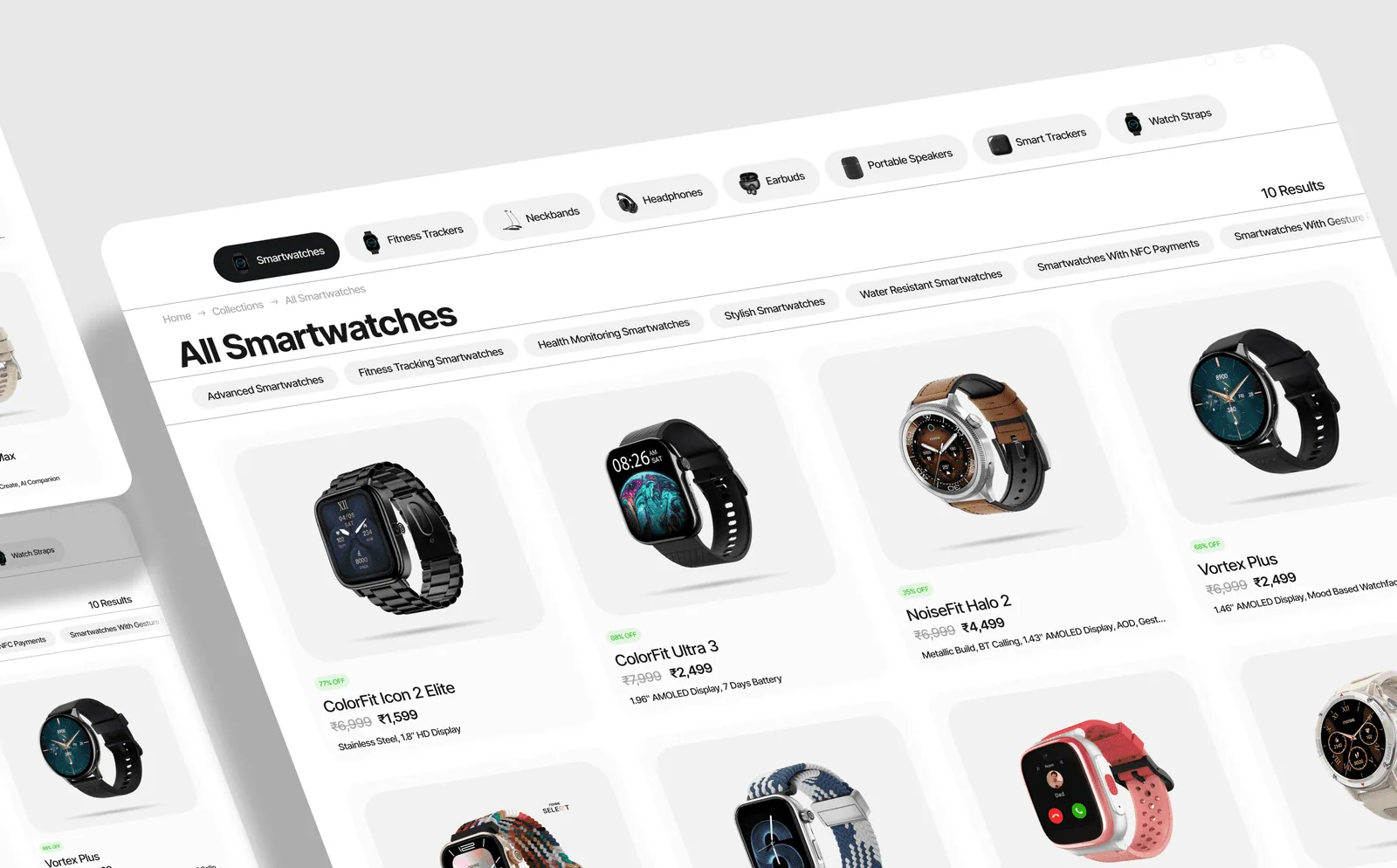
15,000+ products and 1 million monthly visitors, mostly anonymous. Helium read each visitor's context.
 Noise · case study
 Noise · case study
 Noise · case study
Evidence
How the result was reported.
Observed before/after Results compare the store before and after the change, as reported for this case. They are not from a controlled test.
- Brand and brief
- Noise, a smart-wearables brand with 15,000+ products and about 1 million monthly visitors. The brief: help mostly anonymous visitors find the right product.
- Intervention
- Adaptive product curation, contextual product pages and intent-led cross-sells, driven by session signals.
- Date range
- Six months after implementation.
- Result
- Conversion rate +25%, average order value +12%, bounce rate 30% lower, time to purchase under 2 minutes.
The story
Three visitors. One generic experience.
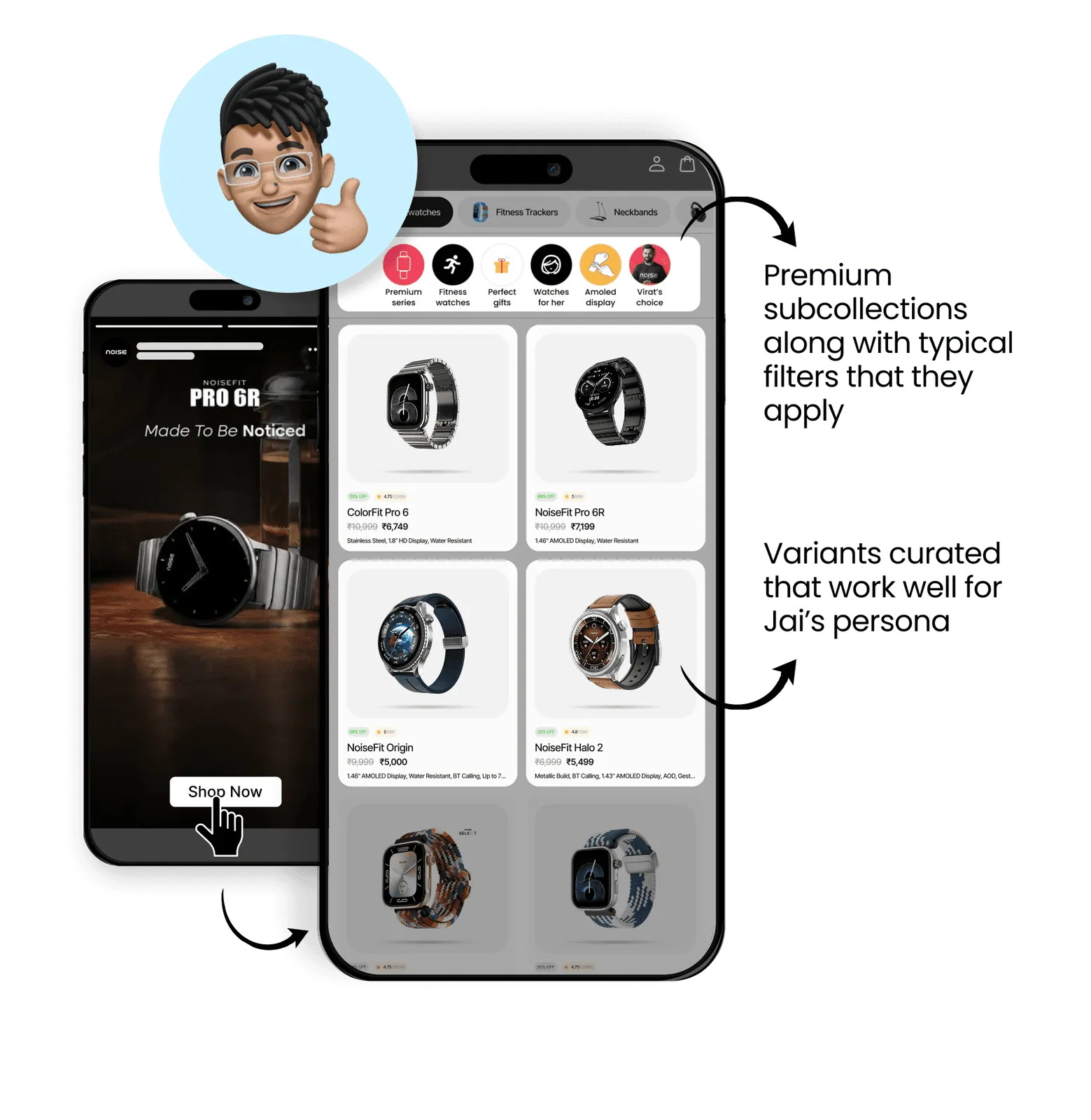
Jai arrives from an Instagram ad and leaves in five seconds. Arjun, a fitness fan, scrolls for 30 seconds and leaves. Isha sees premium products she can’t afford and exits.



More choice means slower decisions. Too much choice paralyses.
The challenge
The catalogue grew. Finding got harder.
- 1 million monthly visitors, most leaving within seconds
- 95% of visitors anonymous
- High bounce rates from too much choice
- Conversion flat despite constant launches
The goal: help visitors find the right product in under two minutes.
The solution
No forms. Just the clues every visitor leaves.
- City and weather: monsoon in Mumbai suggests water-resistant earbuds
- Device type and age: an iPhone 15 and a 3-year-old Android set different expectations
- Traffic source: paid clicks and organic search show different intent
- Visit history: first visits differ from repeat ones
- Session behaviour: what they click, linger on and ignore
Adaptive product curation
Jai now sees smartwatches in his price range, water-resistant first. Value shoppers see clear prices, discounts and EMI.
The result: a 50% reduction in bounce rates.
Make the most relevant options the easiest to see.
Contextual product pages
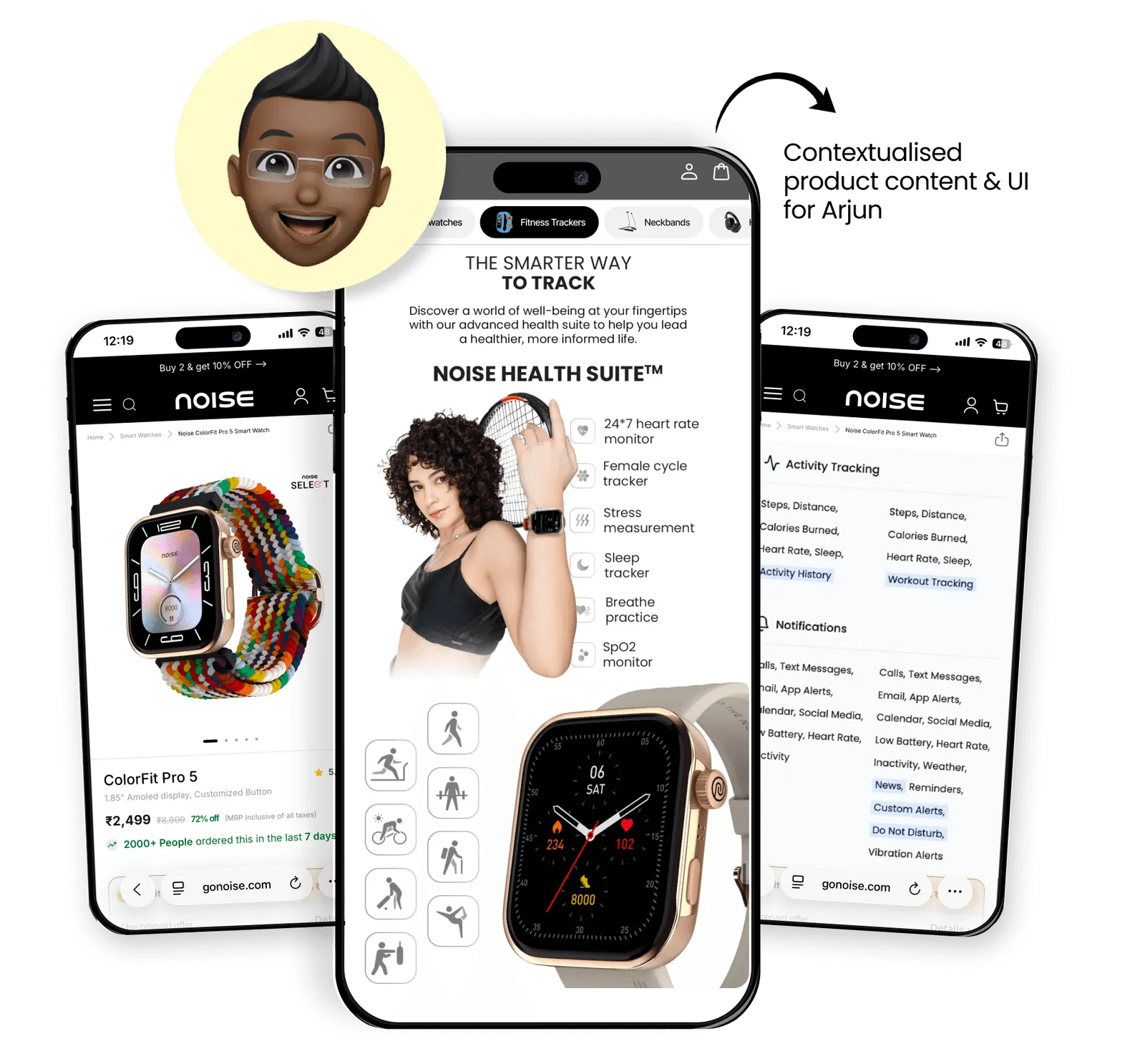
Arjun’s fitness tracker page swaps specs for runner benefits: app integrations, battery life, gait compatibility and outdoor visuals.
The result: a 13% lift in conversions.
Show scenarios shoppers recognise, not specs to decode.
Smart upsells that feel like recommendations
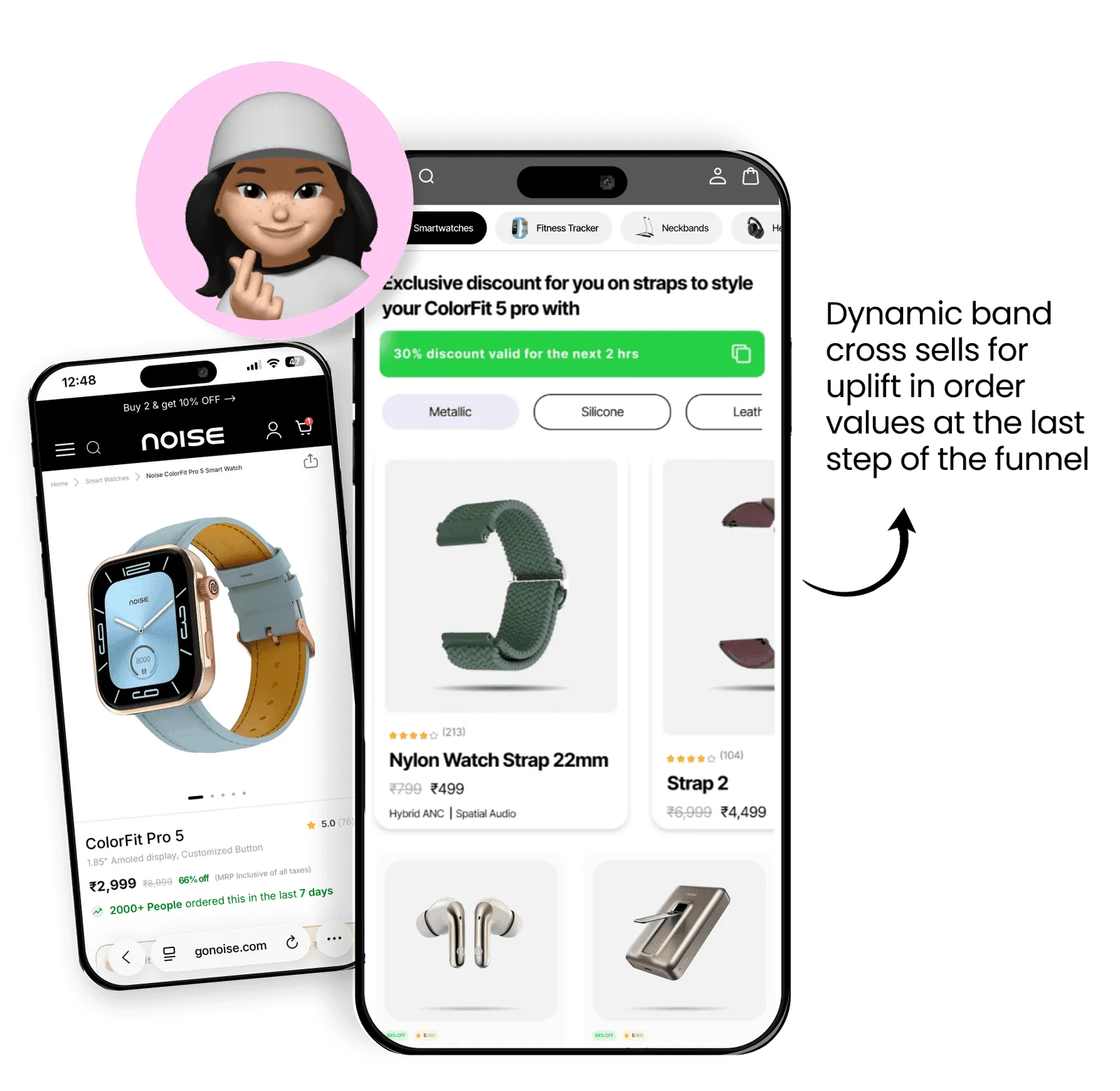
Isha’s smartwatch cart gets a student-priced bundle: rose gold earbuds, a minimalist power bank and a trending strap.
The result: a 12% increase in average order value.
How options are framed shapes the decision.
How it works
Three signals, read in milliseconds.
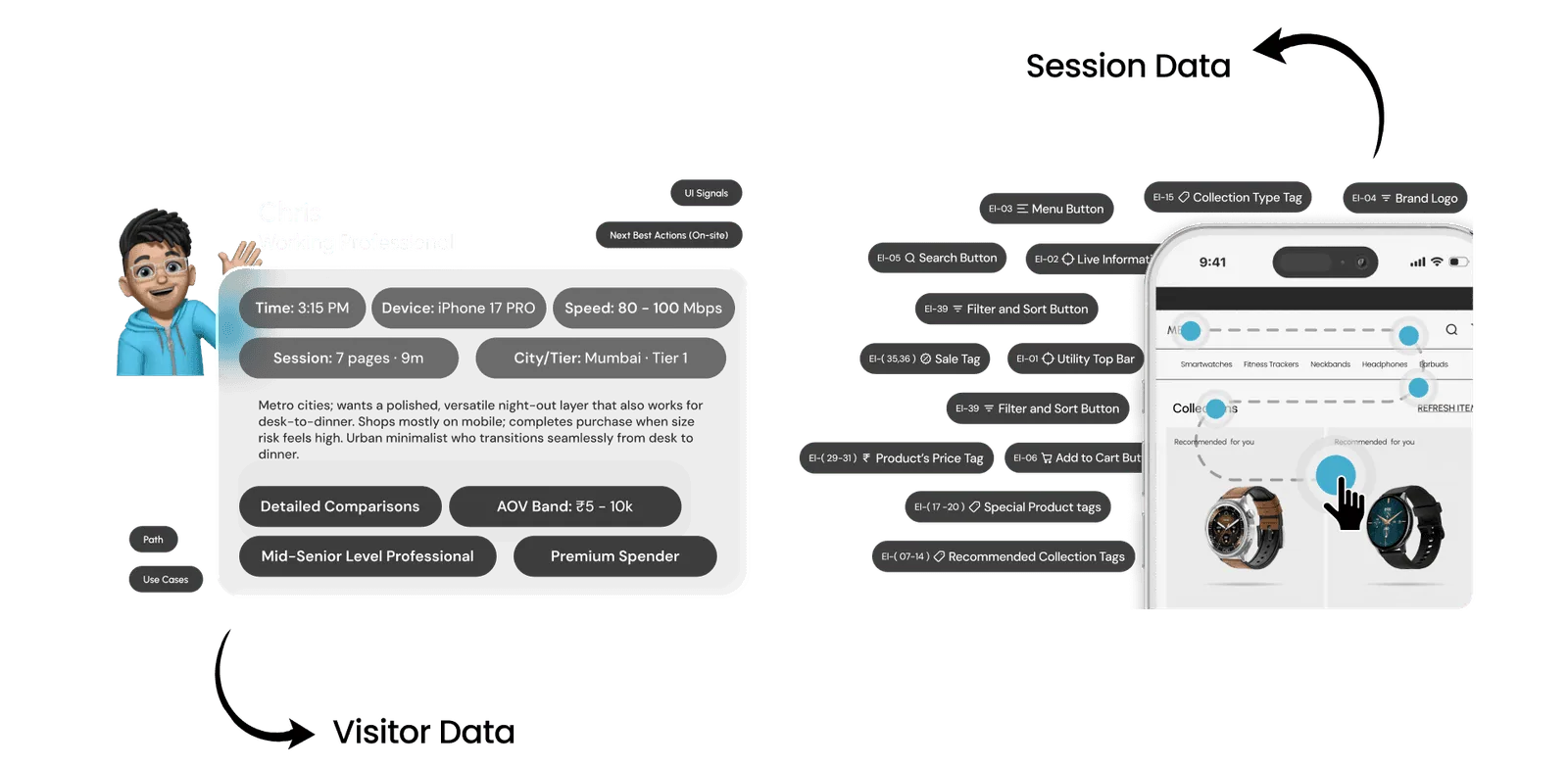
Real-time signals
Device, location, traffic source, time of day and past behaviour, read on landing.
Progressive learning
Clicks, hovers and scrolls refine the experience as the visit goes on.
Attribute-led recommendations
Products picked on battery life, design or price, not generic “similar products”.
The results
Numbers that tell the story.
Six months after implementing Helium.
Conversion uplift
Conversion rate: 25% higher.
Increase in AOV
Average order value: 12% increase.
Lower bounce rate
Bounce rate: 30% lower.
- Time to purchase: under 2 minutes
- Cart abandonment dropped as confidence grew
The takeaway
Personalisation isn’t a feature. It’s the foundation.
Shoppers expect a store that is relevant and respects their time.
Book a call
Let's look at your store first.
30 minutes. We look at your store before we talk.
Want to test us on content first? Get a free sample