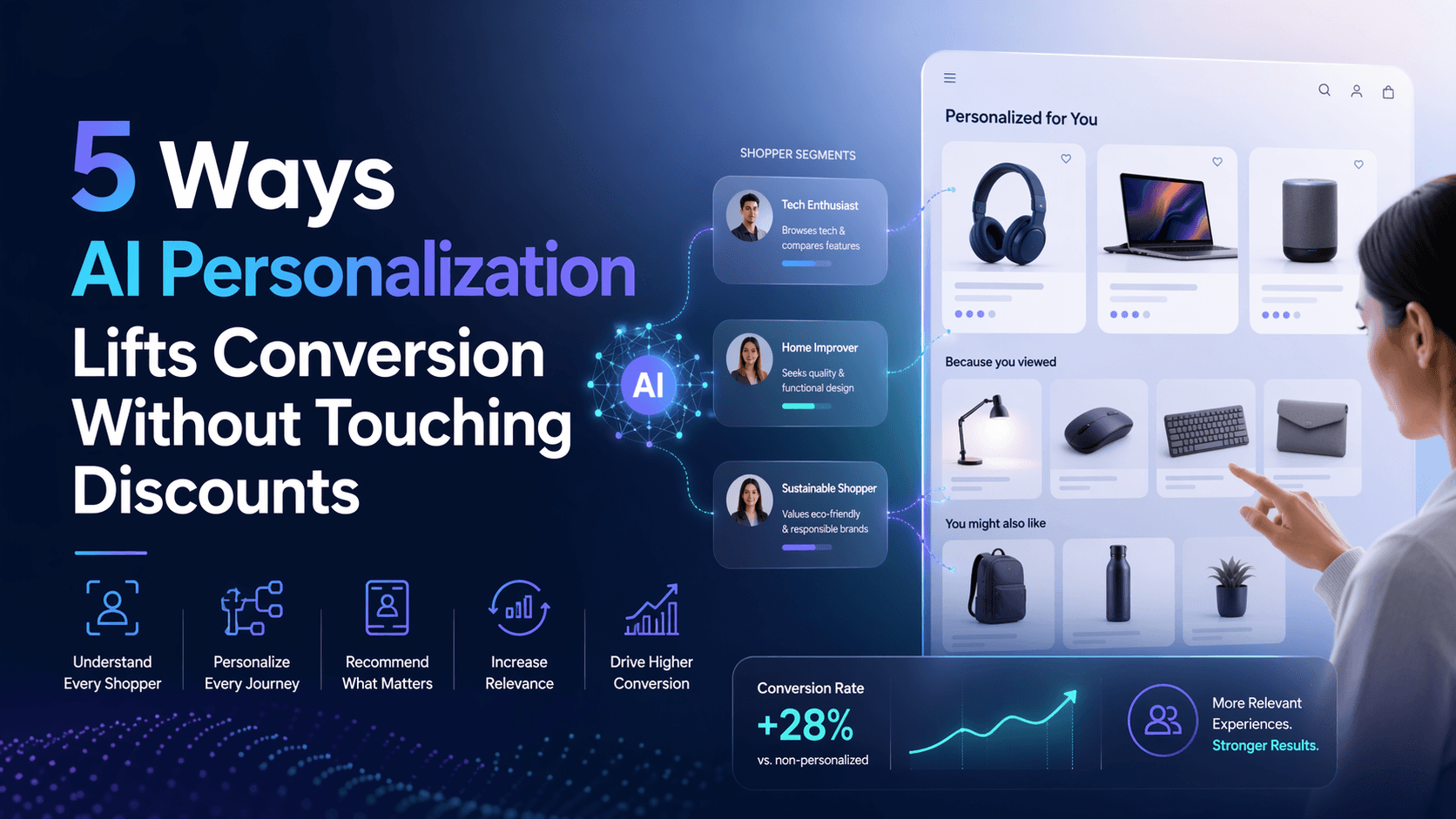
Discounts can move inventory, but they don’t solve why people hesitate to buy.
Most drop-offs happen before checkout. Shoppers get stuck comparing products, second-guessing what fits their needs, or leaving carts open while they “come back later.”
When visitors see products that match their context—skin type, city, occasion, or even what they clicked on in an ad—they move faster and buy more confidently. That’s when conversion lifts without a single coupon code.
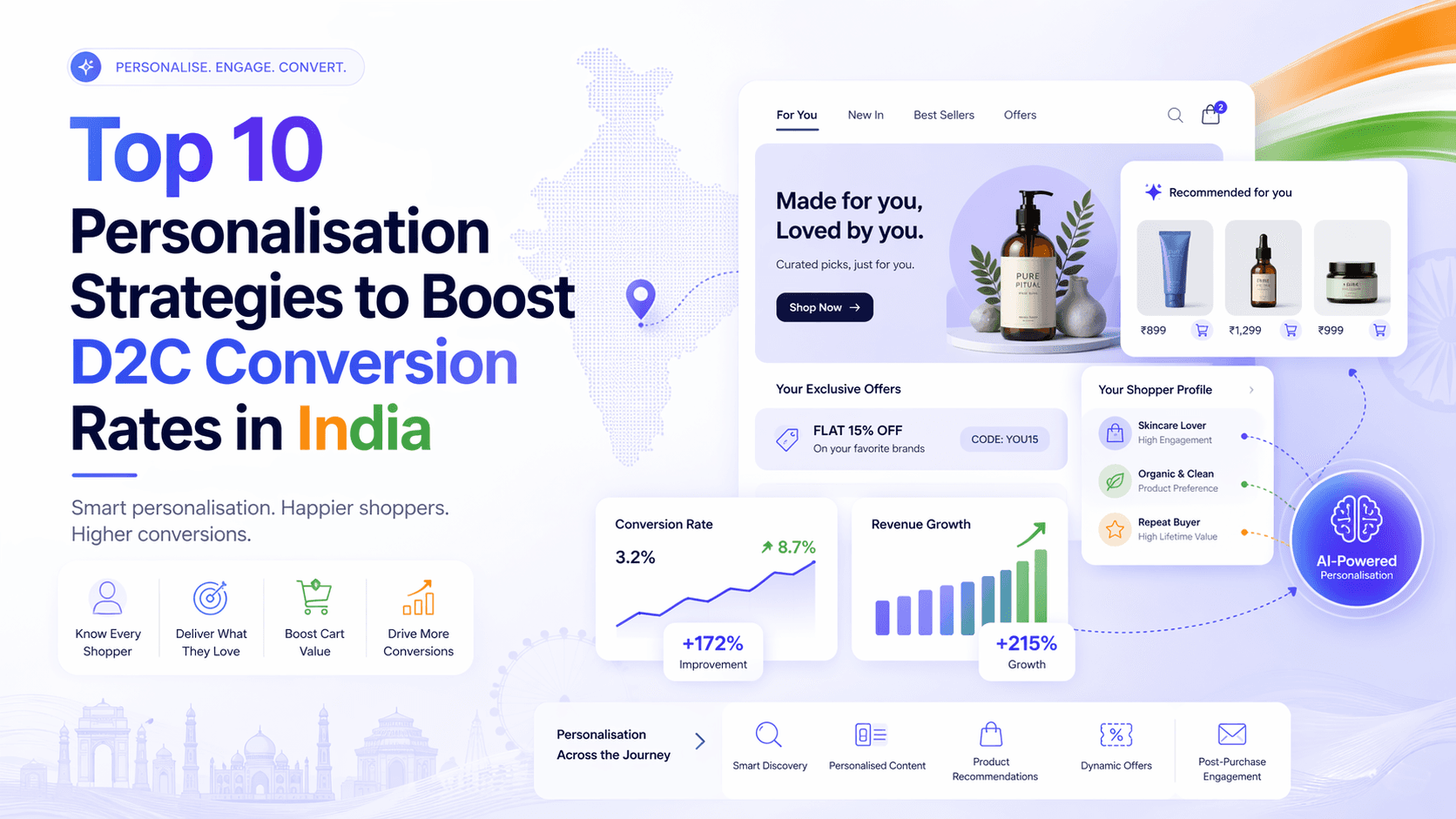
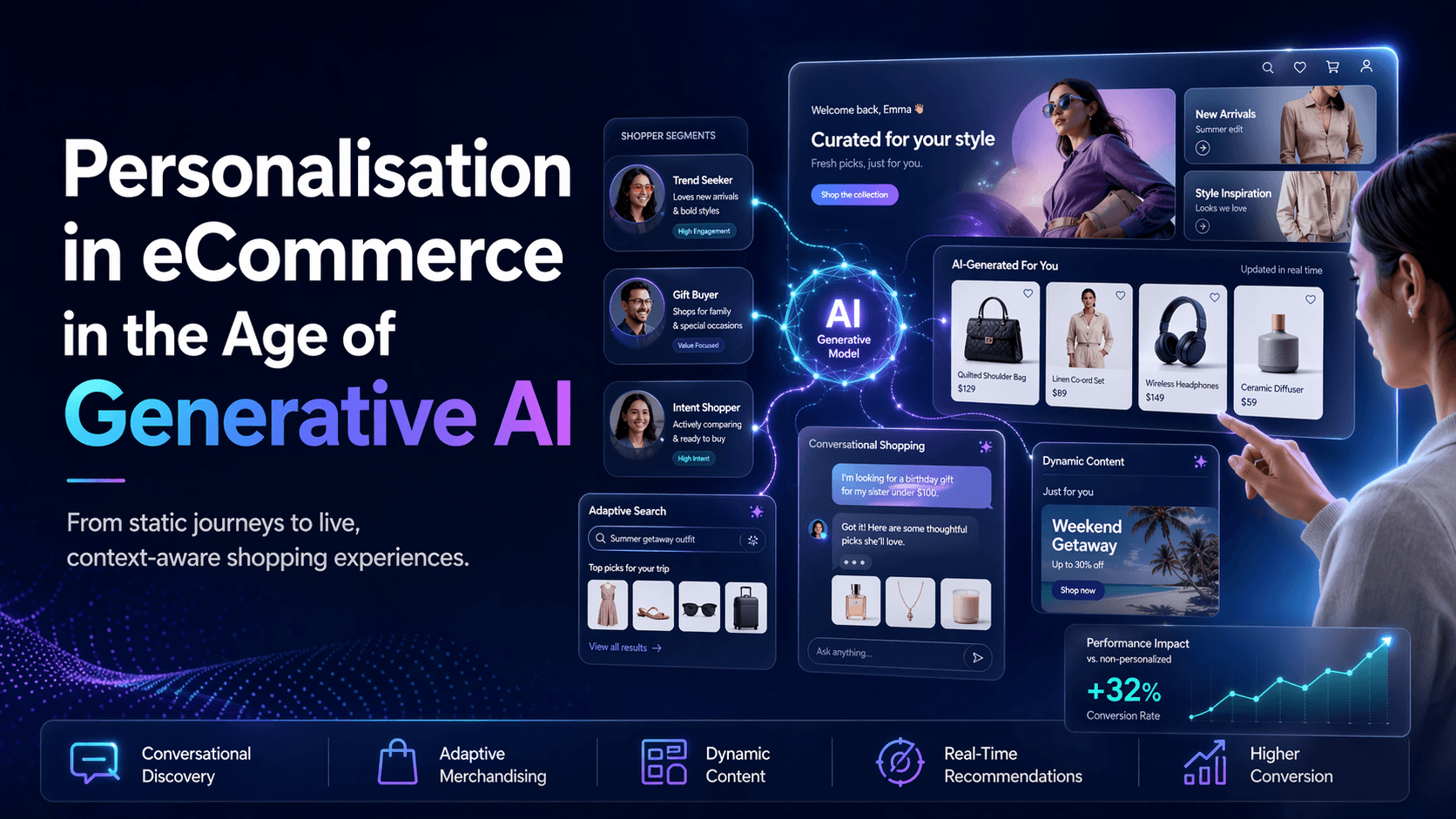
AI personalization helps you get there. It identifies patterns in how each visitor shops—what they browse, ignore, or revisit—and adjusts the journey in real time. Discovery gets cleaner. Product pages get context. Carts get smarter. And all of it happens without touching your pricing strategy.
In this article, we’ll break down five ways brands are using AI personalization to lift conversion and AOV; not by discounting, but by removing friction from every step of the shopper journey.
Way #1: Fix discovery friction before it kills intent
The first 10 seconds decide whether a visitor buys or bounces. If they can’t find what fits their goal, they won’t explore further, even if your catalog has the right products.
This is where most ecommerce journeys leak intent. Collection pages show too much choice, too little direction. Filters feel mechanical. Relevance depends entirely on how much time a visitor is willing to spend searching.
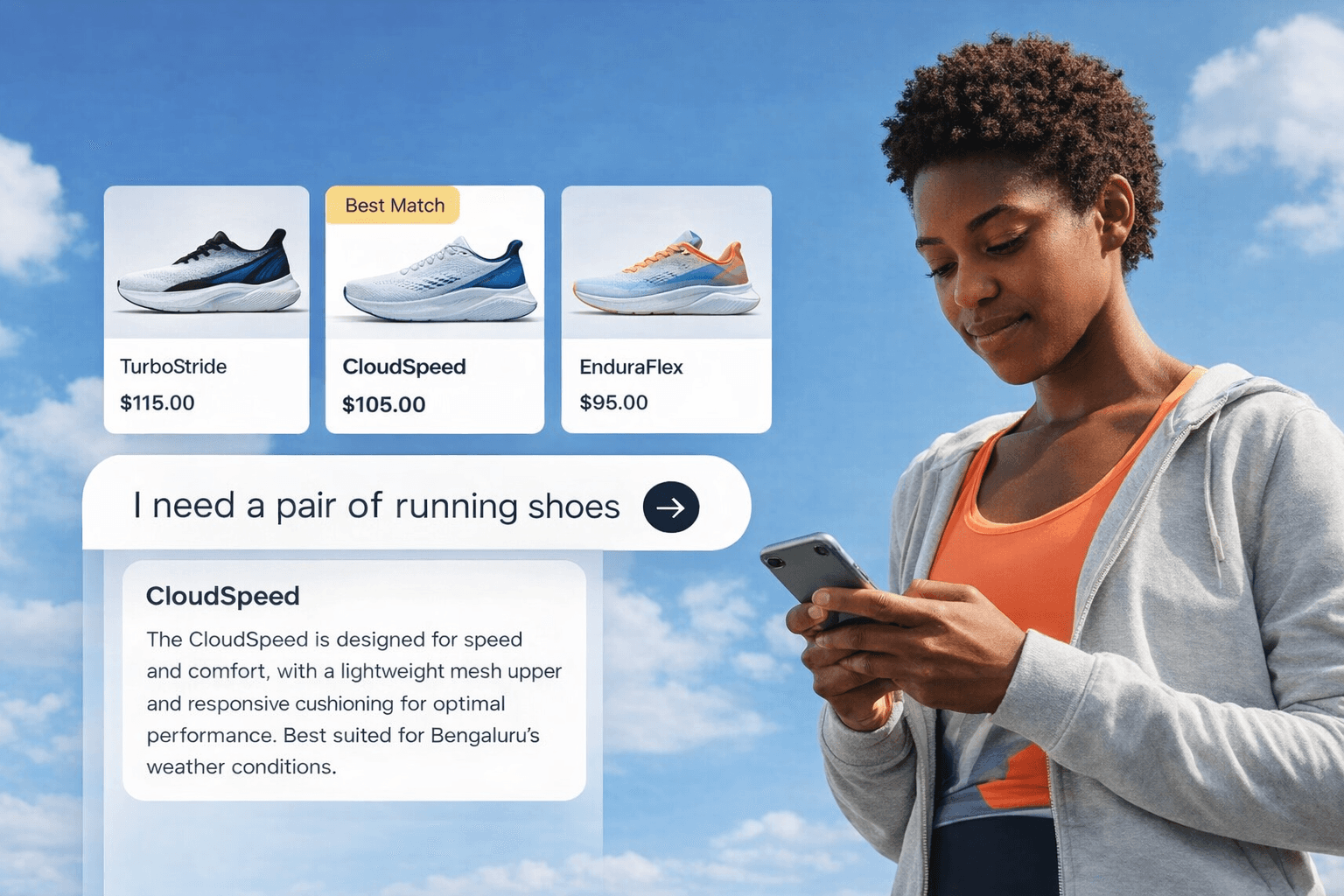
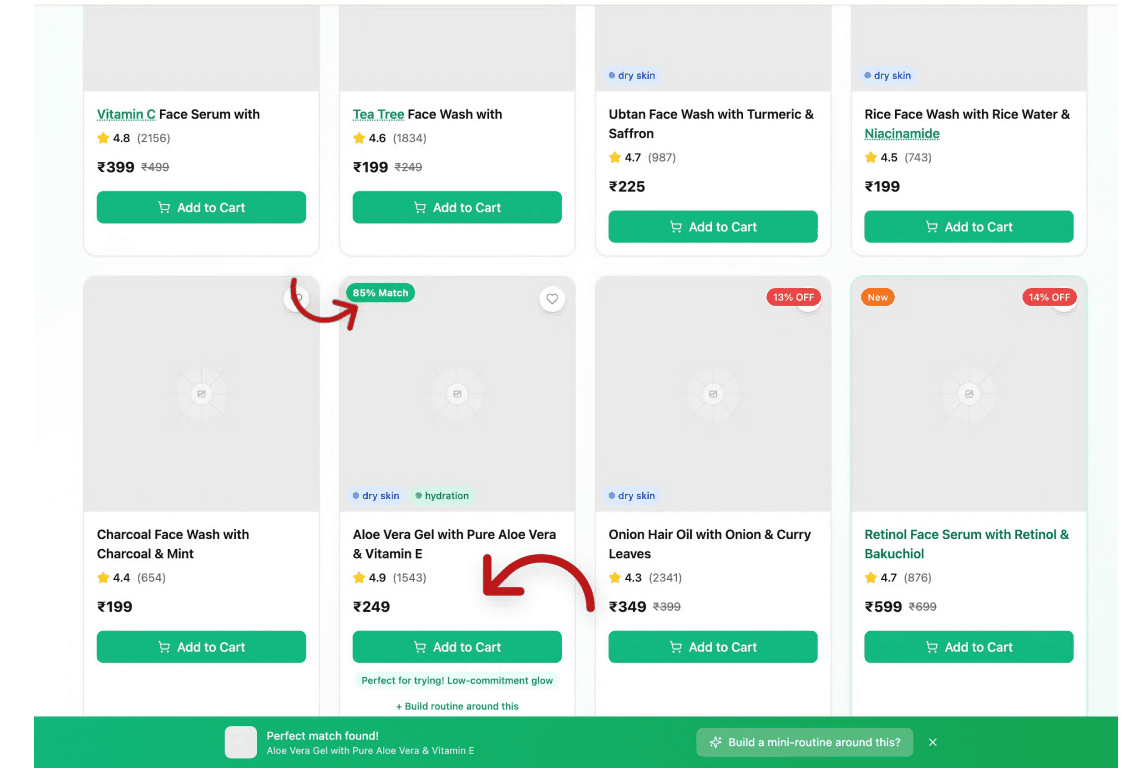
AI personalization solves that by reading the context behind every visit (where the user came from, what category they lingered on, their device, city, or even speed of scrolling), and reshaping what they see in real time.
Instead of a static grid, each visitor gets a curated layout:
Products ranked by probability to convert (not by stock order).
Variants and price bands that match their past engagement.
Real-time surfacing of in-stock and high-performing SKUs.
For example, someone browsing festive wear after coming from a Meta ad should see this week’s new arrivals and matching accessories, and not clearance stock. On mobile, the layout compresses to faster-loading visuals and a single call-to-action, so shoppers reach a decision before they scroll away.
The results are:
More visitors reach product pages in fewer clicks.
The first add-to-cart happens faster.
Bounce rates drop because every scroll feels purposeful.
Way #2: Lift add-to-cart rates with smarter, adaptive bundles
Most bundles look like marketing rules. You show a fixed combo and hope it sticks. That fails because shoppers don’t buy rules, but they purchase coherence. AI bundling fixes this by building combos from signals you already collect in-session. It uses three things in real time:
Behavioural signal: What the visitor clicked, viewed, and added to the cart this session.
Attribute match: Colour, fabric, occasion, size, or style tags that keep the look coherent.
Price band: Items within ±20% of the product the shopper is considering, so suggestions don’t feel out of budget.
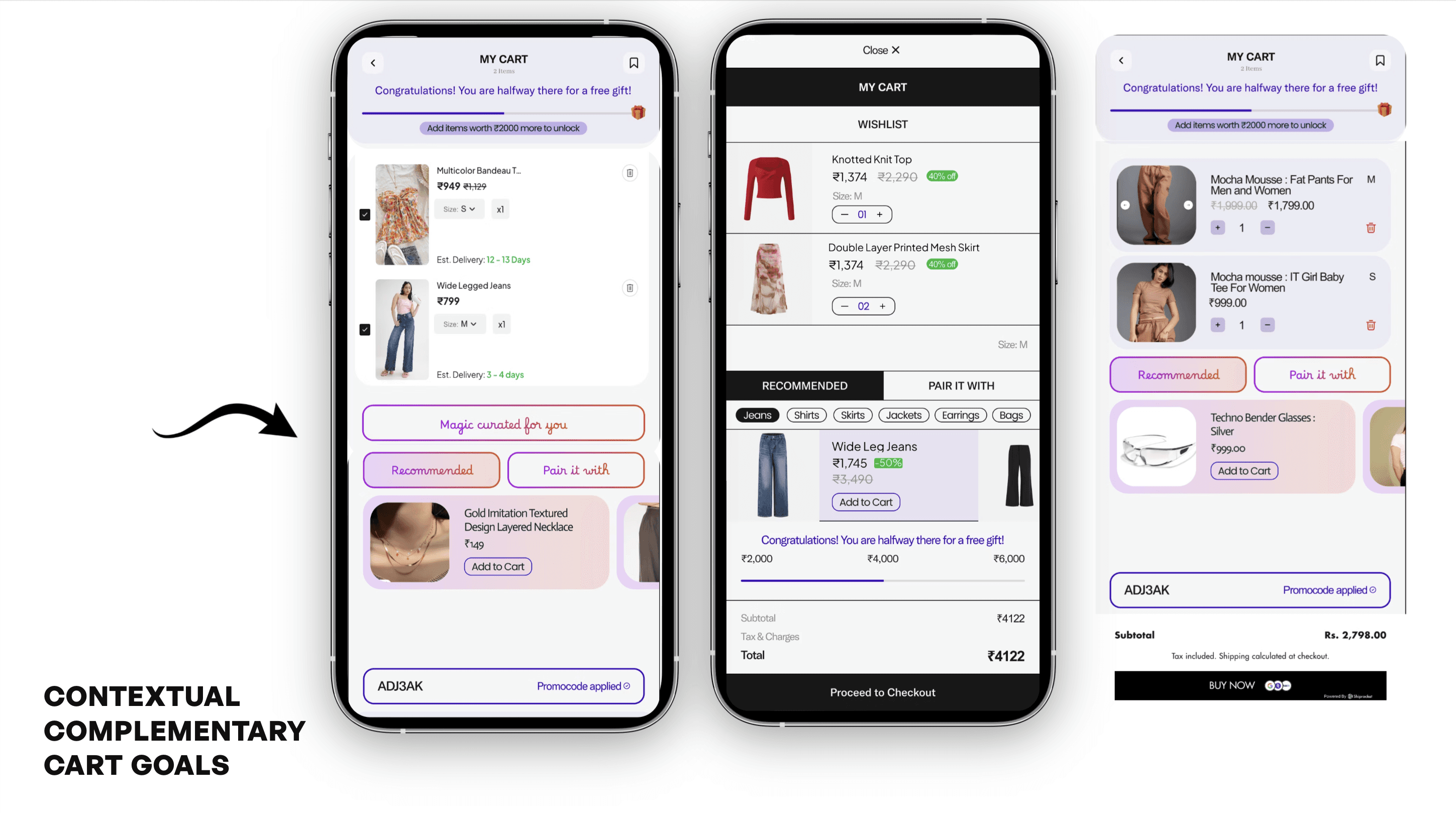
How it works in practice
When someone adds a beige kurta, the system searches for items that match on attribute and price, ranks them by historical co-purchase probability, and surfaces the top 2–3 as “Complete the look.”
It avoids suggestions that increase shipping thresholds or create size mismatches. You push relevant options at the moment of choice, and not before intent exists.
Why this converts: you remove the mental step where shoppers ask, “Does this go together?” That single reduction in decision cost increases units per transaction without changing price.
Quick implementation checklist (what you must test):
Track and test these variables for fast implementation:
Train on past order data (6–12 months) to identify natural product pairings.
Limit bundles to ±20% price range of the original item.
Filter by key attributes: colour, material, and occasion.
Exclude high-return or complex-to-ship products.
Run an A/B test between static and AI bundles. Measure:
Units per order
Add-to-cart rate
Return rate
For example, W for Woman used Helium to connect outfit discovery with matching accessories and seasonal collections. By analysing live visitor behaviour and SKU-level context, Helium created dynamic “Complete the Look” sections across PDPs, lifting conversions by 48% and increasing basket size by 6% within a few weeks.
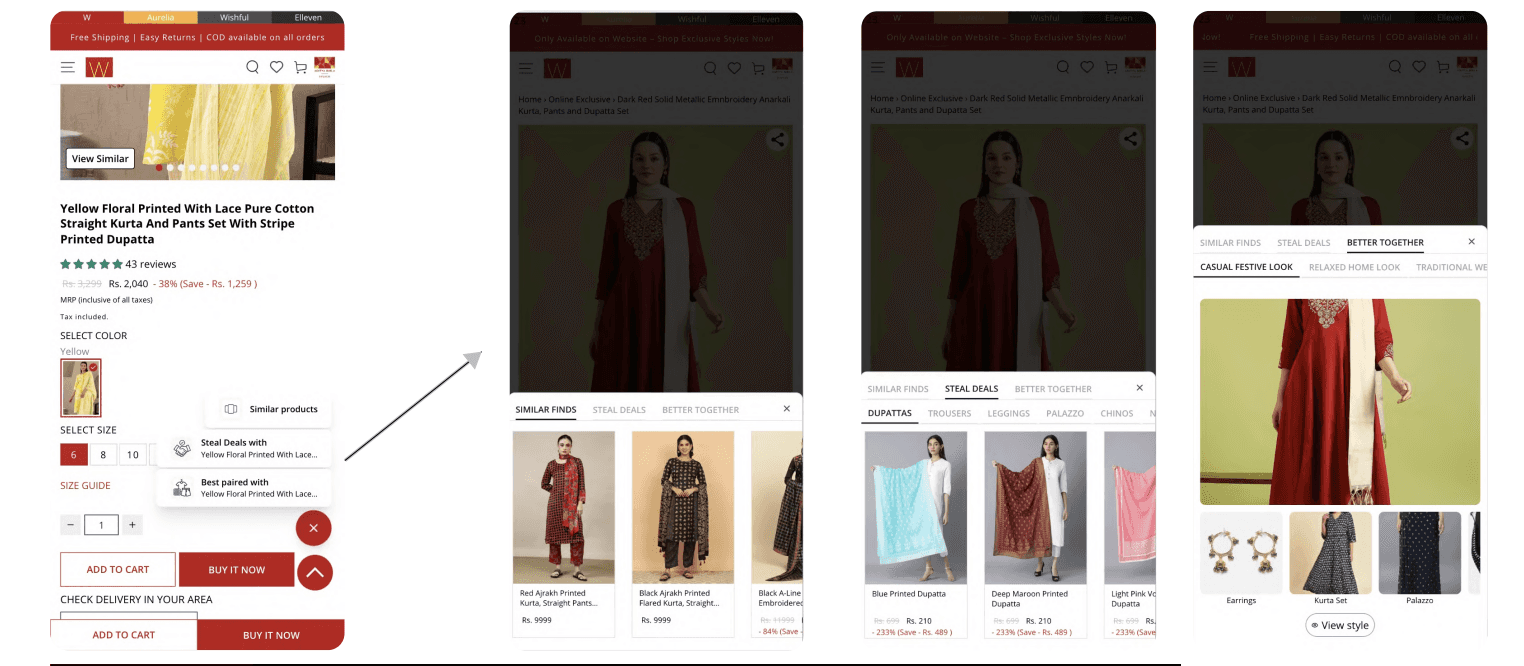
Way #3: Personalize the cart—where real conversion happens
Most visitors don’t abandon because of price; they do so because the cart feels generic. Once a shopper adds a product, the experience freezes. No guidance, no reassurance, no context. That silence is what kills conversion.
Your cart should act like a live sales assistant: adapting to what’s inside, who’s buying, and what matters to them. You can personalize in three specific ways:
Progress nudges:
Show dynamic prompts like “₹200 away from free shipping” or “Add 1 more item for 10% off shipping”.
These convert hesitation into small, confident actions.
Relevant cross-sells:
Recommend products that logically complete what’s in the cart, and not random upsells.
Match by colour, use case, or price band, so the suggestion feels natural.
Trust cues:
Surface delivery timelines, stock alerts, or simple reassurance like “Easy 7-day returns”.
Remove the final doubts that stop checkout.
By implementing this, you're solving the last friction that stands between intent and purchase: uncertainty. When the cart feels relevant, complete, and safe, shoppers stop overthinking and finish the transaction.
For example, Dr. Sheth’s used session-level cart personalization to surface “routine add-ons” like moisturizers and serums based on what shoppers had already added. This lifted checkout completion by over 10% in the first week, without touching price or offers.
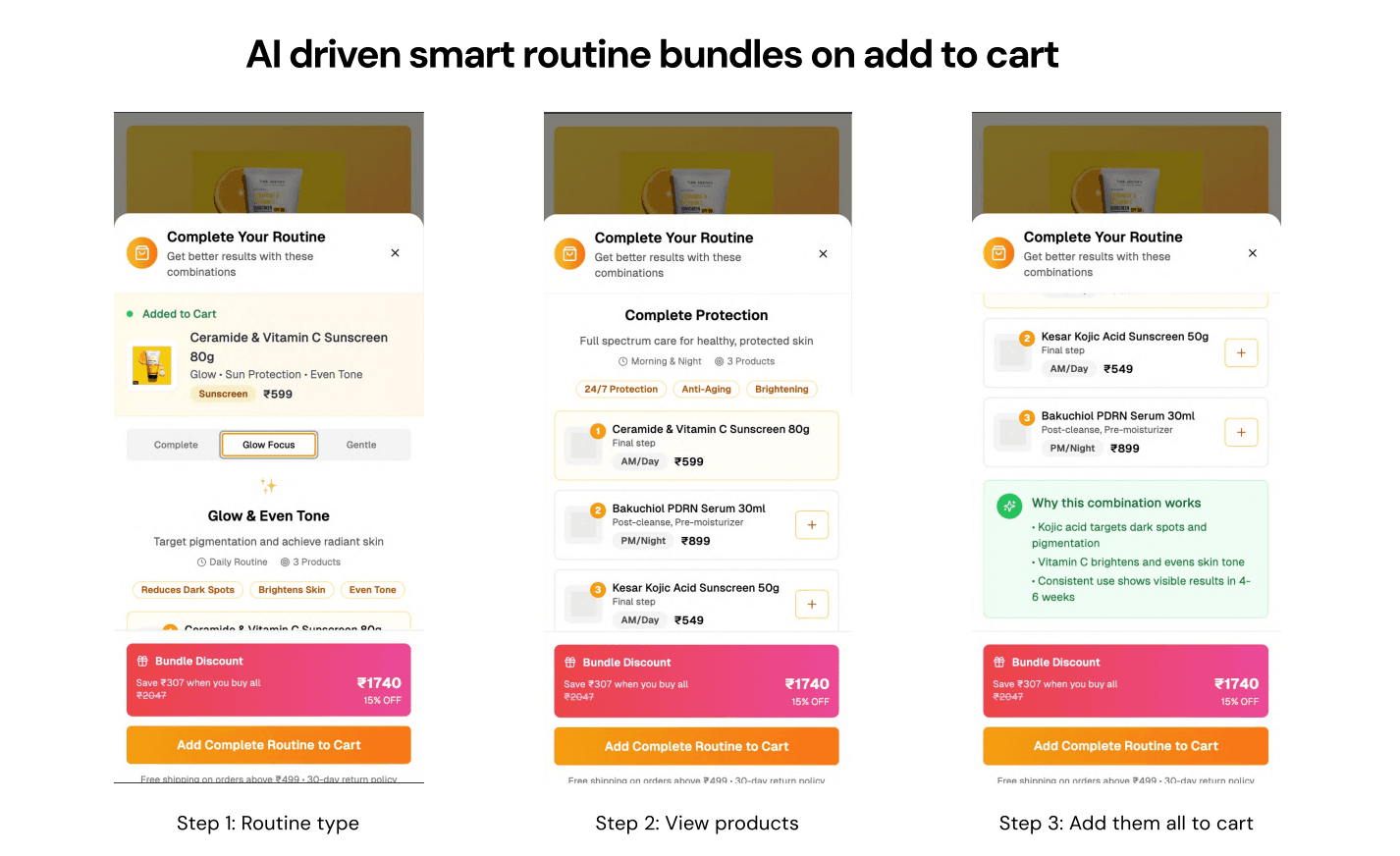
What to track
To quantify this layer of personalization, monitor:
Cart-to-checkout conversion rate (baseline vs. after personalization).
Abandonment rate (especially for high AOV products).
Incremental AOV (from context-based cross-sells).
Way #4: Optimize timing, not just targeting
Most brands focus on who to target, and not when. But even the right message fails if it shows up at the wrong moment. When you push urgency too early or retarget every visitor equally, you waste impressions and irritate the people most likely to buy.
AI systems can read engagement rhythm: how often a visitor views a product, how long they stay, and when they return. That timing data helps you act with precision, rather than pressure.
Here’s how to use it:
Trigger urgency only for repeat visitors:
Show “Low stock” or “Selling fast” nudges only when someone has viewed a product multiple times.
For first-time visitors, keep discovery friction-free—urgency too early kills exploration.
Retarget based on intent, not clicks:
Retarget only those sessions that cross a set engagement threshold (e.g., time spent, page depth, add-to-cart).
Suppress low-intent traffic from paid channels as it keeps ROAS clean and spend efficient.
Time your follow-ups:
For returning visitors, delay retargeting until they’ve re-engaged organically to strengthens perceived relevance.
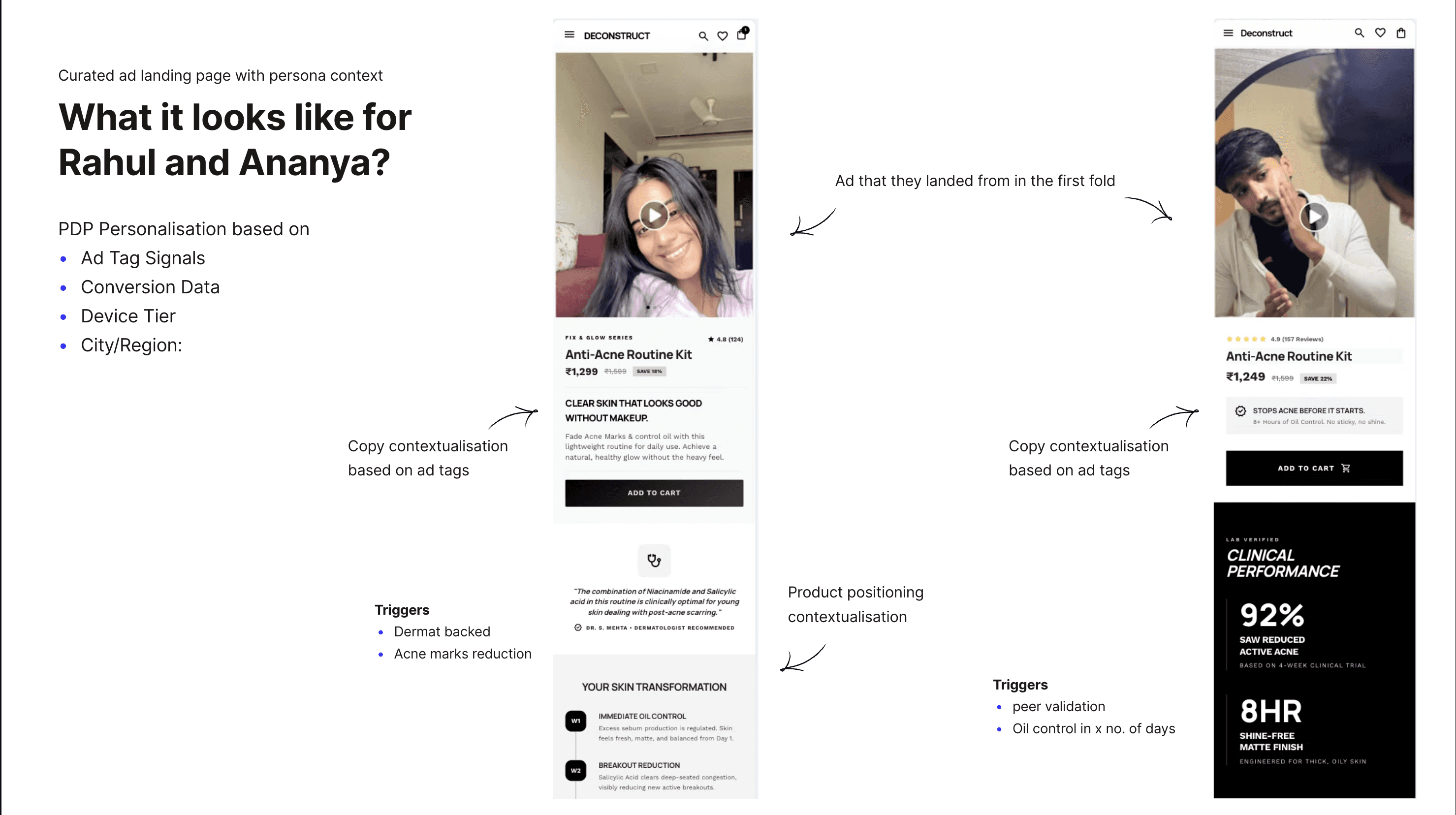
For example, a Skincare brand used timing-based personalization to adapt product messaging for returning visitors: changing PDP content based on when and how they revisited the same product after an ad click. By suppressing low-intent sessions, they improved retargeting ROI by 27% and reduced wasted ad impressions by half.
Way #5: Match the story to the buyer
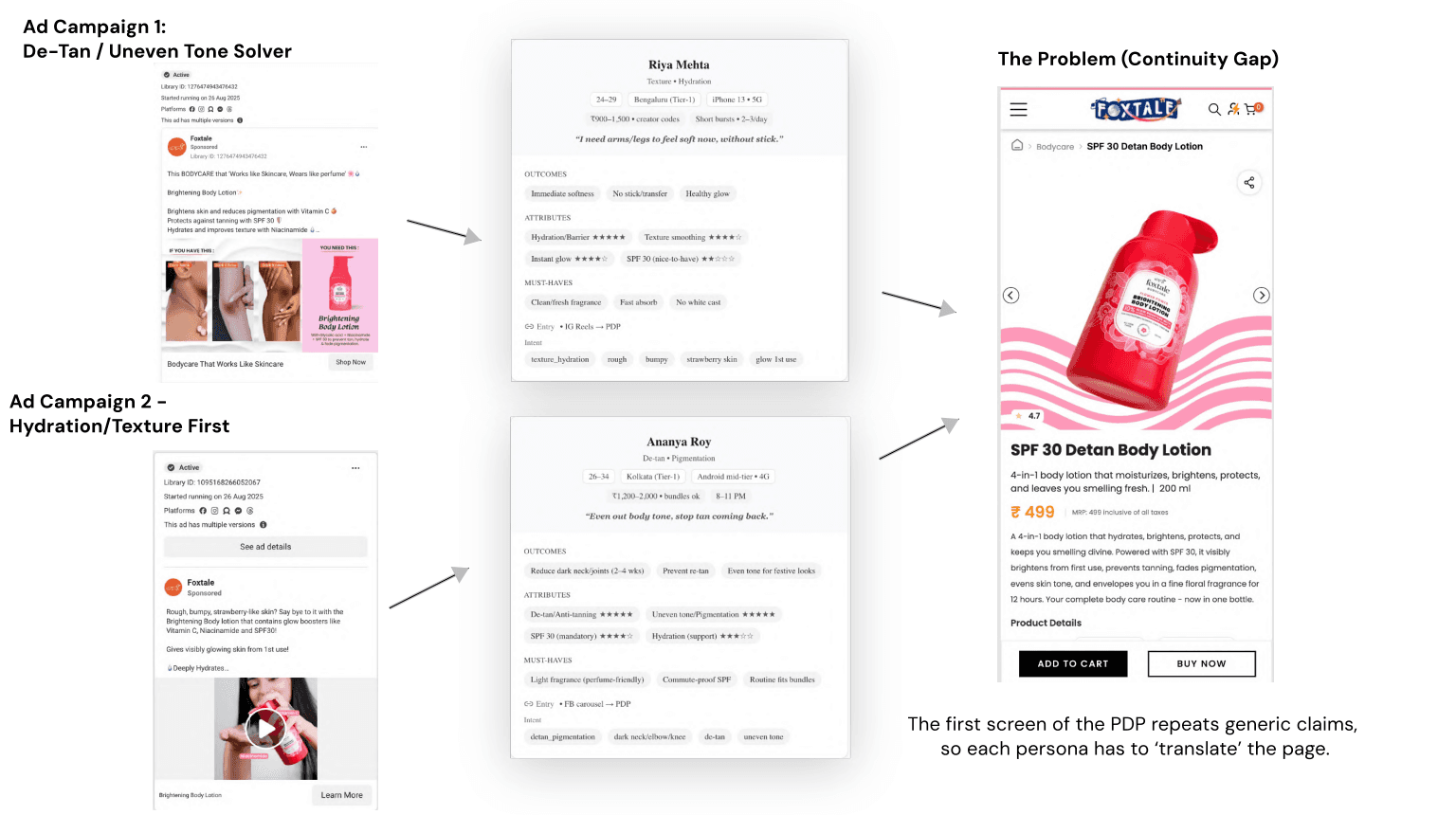
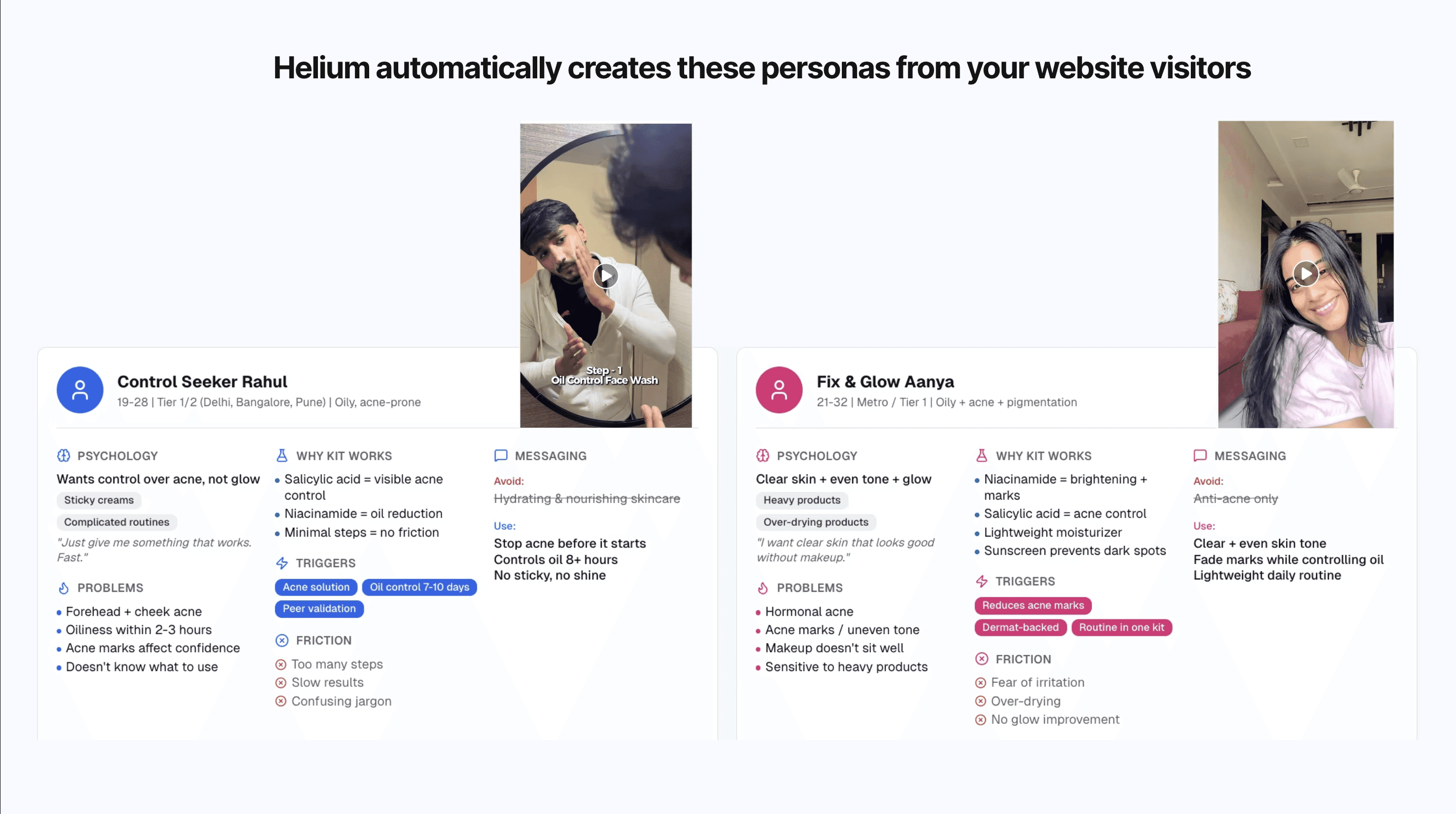
Most brands show the same story to every visitor: same headline, same hero image, same tone. But shoppers don’t arrive with the same intent. A first-time visitor needs proof. A loyal buyer wants speed. A returning cart visitor needs reassurance. When everyone sees the same content, no one feels understood.
What contextual storytelling looks like
Personalization isn’t about showing more data, but about adjusting the story to fit the visitor. You do that by changing what you say and how you say it based on real context:
Location: Show “summer skincare” in humid cities, “hydration routines” in dry regions.
Visitor type: Swap hero visuals for new vs. returning visitors—discovery for one, familiarity for the other.
Purchase history: Hide offers already used; instead, surface fresh recommendations or loyalty cues.
This results in higher engagement from first-page visitors, and stronger trust from returning customers.
Stop optimizing for discounts. Start optimizing for decisions.
You don’t need deeper promotions to grow. You need cleaner paths to purchase.
CRO is how well your store reads and reacts to each visitor. AI just helps you do that at scale, session by session.
Helium brings that intelligence into every session: reshaping what visitors see, when they see it, and why they buy. When your store adapts to intent in real time, discounts become optional because relevance (not price) drives conversion.
Want to see how adaptive personalization can improve your CRO? Book a demo with Helium to see how mapping buyer signals to higher conversions without touching your margins.