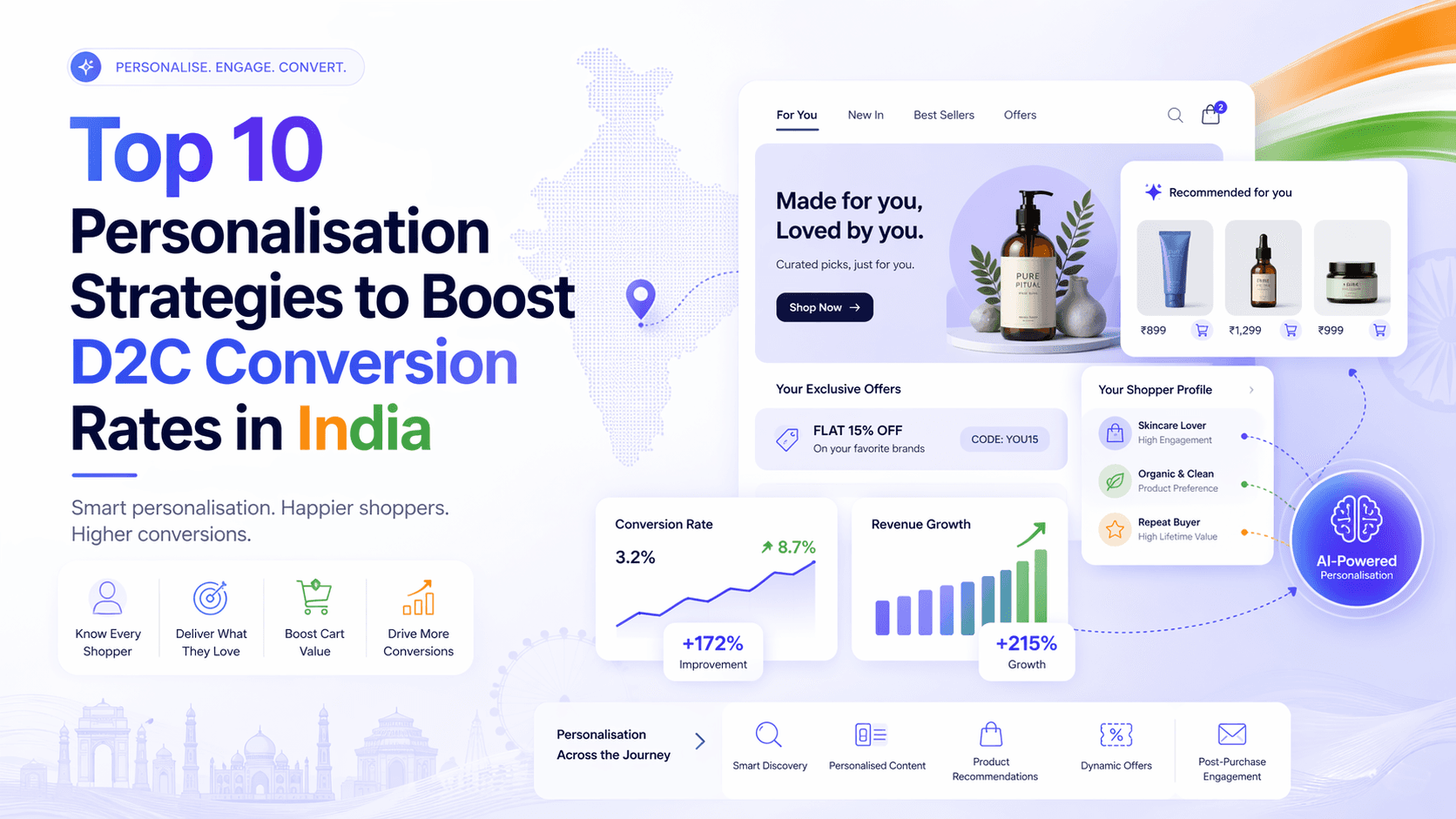
India's direct-to-consumer landscape is undergoing a fundamental transformation. With 72% of consumers now expecting personalised experiences and Indian e-commerce personalisation proven to boost conversion rates by 25–40% when properly implemented, D2C brands that fail to personalise are effectively leaving revenue on the table.
For Shopify store owners operating in this market, the question is no longer whether to personalise — it's how to do it intelligently, at scale, and in ways that resonate with India's uniquely diverse audience.
This guide breaks down the top 10 personalisation strategies driving D2C conversion rate optimisation in India, with actionable insights tailored for brands ready to grow beyond metro markets.
1. Build a Mobile-First Personalisation Architecture
With over 85% of digital traffic in India originating from mobile devices, your personalisation stack must be designed mobile-first, not adapted as an afterthought. This means fast-loading personalised banners, thumb-friendly CTAs, and dynamic content blocks that render seamlessly on mid-range Android devices.
Shopify brands should audit their personalisation widgets for Core Web Vitals performance on mobile. A slow personalised experience is worse than no personalisation at all — it increases bounce rates and destroys the trust you're trying to build.
Action point: Use mobile-specific A/B tests to identify which personalised elements drive the highest tap-through rates across device types.
2. Deploy AI-Powered Product Recommendation Engines
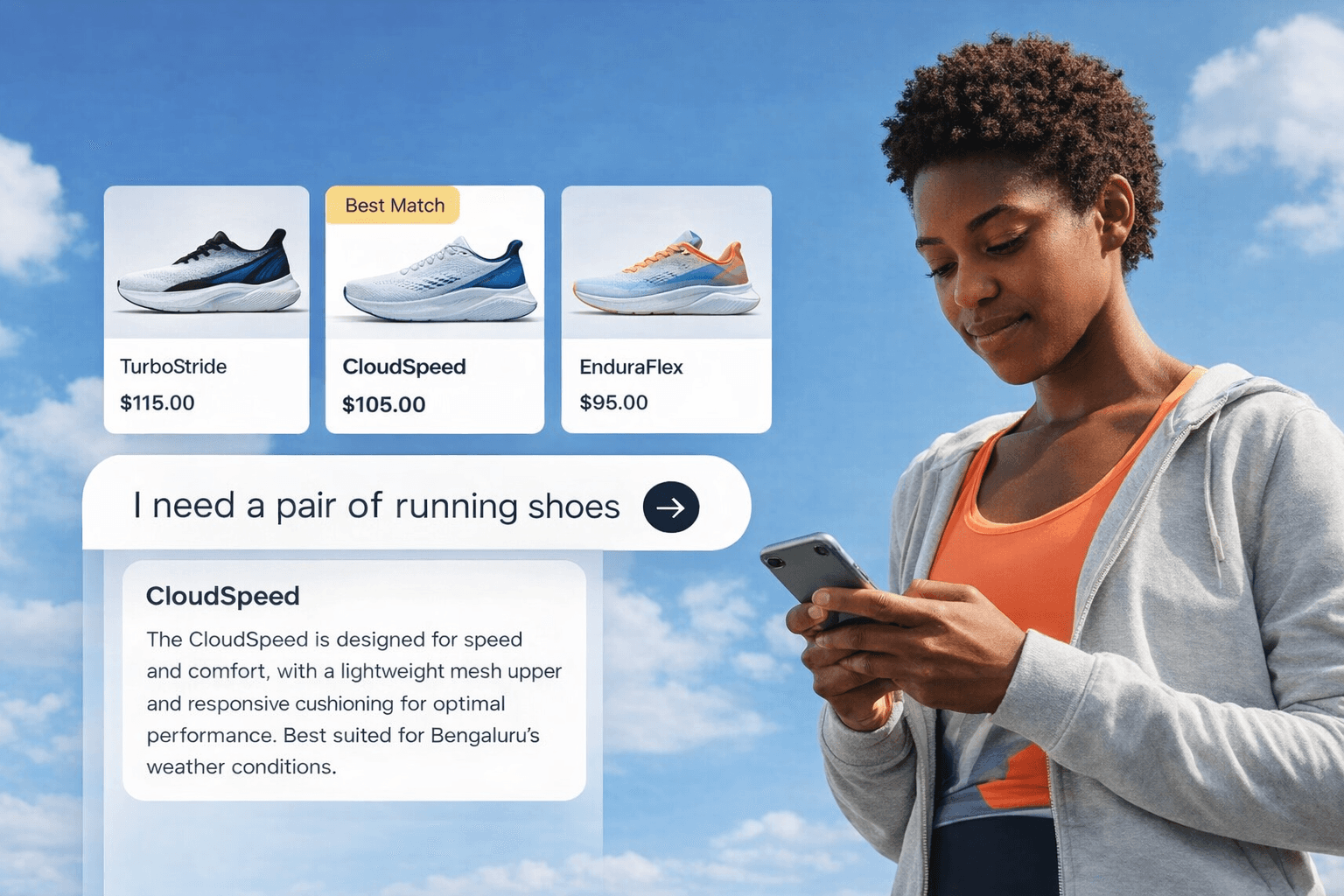
AI-powered recommendation engines can increase average order value (AOV) by 15–30% in Indian D2C markets. Instead of generic "You may also like" sections, modern recommendation engines analyse browsing history, purchase behaviour, price sensitivity, and even time-of-day patterns to surface products that genuinely convert.
Platforms like Helium are built specifically for this use case — combining real-time behavioural signals with localised product catalogues to deliver hyper-relevant recommendations without requiring a data science team.
3. Implement Regional Language Personalisation
India is not a monolingual market. Brands targeting tier-2 and tier-3 cities - where the majority of India's next 200 million online shoppers live, must communicate in the language customers think in. Regional language personalisation significantly improves engagement across Hindi, Tamil, Telugu, Kannada, and Bengali-speaking audiences.
Even basic localisation — switching product descriptions, push notifications, and checkout copy into a user's preferred language — can meaningfully reduce drop-offs and improve trust signals. This is especially powerful for categories like FMCG, personal care, and regional foods.
4. Personalise Payment Methods Based on User Behaviour
Payment method personalisation is one of the most underutilised conversion levers in Indian D2C. A customer from a tier-3 city who has previously used Cash on Delivery (COD) should not see a UPI-first checkout — and vice versa.
Behavioural tracking that identifies preferred payment patterns and surfaces them dynamically at checkout is essential for reducing abandonment. Indian D2C brands that intelligently sequence UPI, wallets, BNPL, and COD based on user history and geography see measurable lift in completed transactions.
5. Use Behavioural Triggers to Reduce Cart Abandonment
Behavioural tracking and real-time personalisation reduce cart abandonment by 20–35%. Exit-intent popups, back-in-stock nudges, and time-sensitive personalised discounts triggered by specific on-site behaviours can recover a significant share of lost revenue.
The key is contextual relevance. A generic "Don't leave!" popup is ignored. A message that references the exact product a customer spent three minutes viewing, paired with a limited-time incentive — creates urgency that feels helpful rather than desperate.
6. Leverage Dynamic Pricing Ethically
Dynamic pricing based on user behaviour and location increases conversions by 12–18%. However, implementation must be transparent to maintain brand trust — particularly important in price-sensitive Indian markets.
Ethical dynamic pricing means offering location-based discounts (reflecting regional purchasing power), loyalty-tier pricing, and time-sensitive offers — not inflating prices for high-intent users. Transparency in how pricing is determined builds long-term customer relationships, which is the foundation of successful D2C growth.
7. Activate Personalised Email and WhatsApp Campaigns
Personalised email campaigns achieve 3x higher open rates in Indian markets compared to generic broadcasts. Segment your audience by purchase history, browsing behaviour, and lifecycle stage — then deliver content that speaks directly to where each customer is in their journey.
WhatsApp, particularly for Indian audiences, adds another high-conversion layer. Personalised order updates, restock alerts, and curated product drops via WhatsApp Business API have shown strong engagement rates, especially in tier-2 markets where WhatsApp is the primary digital communication tool.
8. Integrate Localised Social Proof and Testimonials
Social proof and localised testimonials boost conversion rates by 10–15% for Indian audiences. Displaying reviews from customers in similar cities, regions, or demographic backgrounds makes the purchasing decision feel safer and more relatable.
For Shopify brands, this means going beyond star ratings. Featuring video testimonials in regional languages, UGC from local influencers, and location-tagged reviews on product pages can dramatically reduce hesitation — particularly for first-time buyers in newer markets.
9. Build and Activate a Customer Data Platform (CDP)
A Customer Data Platform unifies behavioural, transactional, and demographic data into a single customer profile — enabling the kind of precise segmentation that powers true personalisation. For Indian D2C brands, CDPs are essential for understanding the complexity of a market that spans vastly different spending behaviours, cultural contexts, and digital literacy levels.
With a CDP in place, Shopify store owners can create hyper-targeted segments — such as "high-intent UPI users in southern India who browse on weekends" — and activate personalised experiences across channels without compromising data privacy or PDPB compliance.
10. Track Personalisation ROI With the Right Metrics
Personalisation without measurement is guesswork. The metrics that matter for D2C conversion rate optimisation in India include: conversion rate by segment, AOV lift from recommendations, cart abandonment rate reduction, email open and click-through rates, and revenue per visitor (RPV) across cohorts.
Helium's analytics dashboard is designed to surface these insights in real time, giving D2C brand owners a clear picture of which personalisation levers are generating returns — and which need refinement.
Why Helium Is Built for D2C Conversion Rate Optimisation in India
Most global personalisation tools are built for Western markets and retrofitted for India. Helium is different. Designed specifically for D2C brands operating in India's multi-tier, multi-language, mobile-dominant environment, Helium combines AI-powered personalisation, localised payment integration, regional language support, and privacy-compliant behavioural analytics in one platform — native to Shopify and built to scale.
Frequently Asked Questions
How does regional language personalisation impact D2C conversion rates in India?
Regional language personalisation significantly increases trust and engagement, particularly in tier-2 and tier-3 cities. When product pages, checkout flows, and communications are served in a customer's native language, friction decreases and conversion rates improve — often by double digits for categories with strong regional demand.
What role does a Customer Data Platform (CDP) play in D2C personalisation for Indian markets?
A CDP consolidates data from multiple touchpoints — website, app, email, WhatsApp, offline — into unified customer profiles. This enables precise segmentation and real-time personalisation that accounts for India's diverse consumer behaviours, regional differences, and multi-device usage patterns.
Which payment method personalisation strategies yield the highest conversion in India?
Dynamically surfacing a user's previously preferred payment method — whether UPI, COD, wallet, or BNPL — at the checkout stage consistently reduces abandonment. Combining this with location-aware payment prioritisation (e.g., defaulting to COD in lower-connectivity regions) further improves completion rates.
How can dynamic pricing be ethically implemented for D2C conversion optimisation?
Ethical dynamic pricing focuses on positive differentiation: loyalty rewards, regional affordability adjustments, and time-limited offers — rather than penalising high-intent users. Transparency about pricing rationale and consistent brand behaviour are critical to maintaining consumer trust in India's price-conscious market.
What metrics should be tracked to measure personalisation ROI in Indian D2C?
Key metrics include: conversion rate by customer segment, average order value lift, cart abandonment rate, email and WhatsApp open/click rates, revenue per visitor, and returning customer rate. Tracking these across cohorts — not just in aggregate, gives D2C brands the granular insight needed to optimise personalisation investments continuously.