The leak sits on the product page.
For many Indian skincare brands, the biggest revenue leak is not getting people to the site. It is getting ready buyers to move from product page to cart.
This stage is where many brands lose 60–70% of qualified traffic. Indian skincare brands often sit around 3–4% PDP → ATC, while global ecommerce is closer to 7.5%. That gap makes PDP → ATC one of the highest-leverage places to improve revenue without raising spend.
A page that gets more traffic and still leaves doubt alive is a more expensive page.
Three doubts shape the cart in Indian skincare
Indian skincare buyers carry three layers of friction into the PDP:
Product-skin-match doubt
Will this suit my skin type, concern, and local conditions?Trust-price doubt
Will this work well enough to justify the price?Visual proof doubt
Do I see believable results on people who feel relevant to me?
These three doubts show up again and again in this market, and they are stronger in Indian skincare because of climate variation, tone variation, routine complexity, and higher first-order risk.
The page gets judged fast
A skincare PDP gets read in layers.
The first layer is fast:
Does this look meant for me?
Do I understand what it does?
Do I feel safe going further?
This micro-decision happens in the first 8–12 seconds, and that pages do better when they give clear fit language, clear exclusions, and realistic result windows. It also points to stronger performance when shopping tools provide direct “who this is for” and “who this is not for” details.
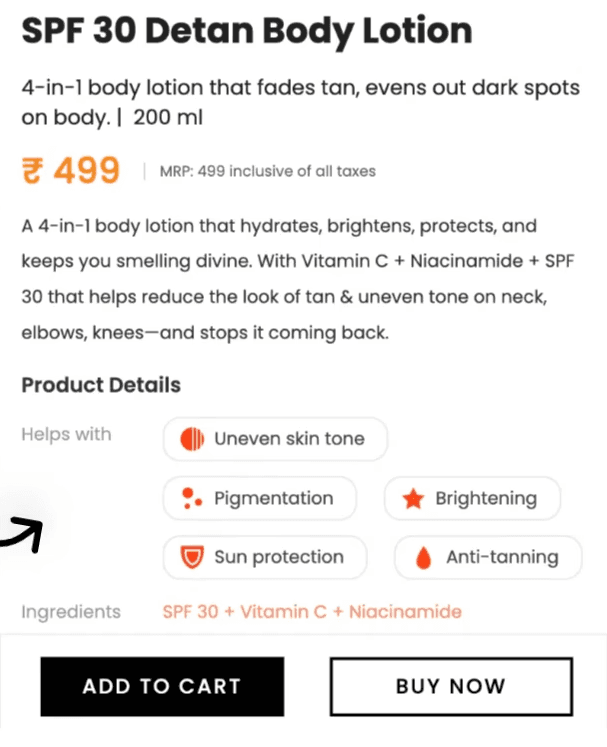
Risk needs to be handled before checkout.
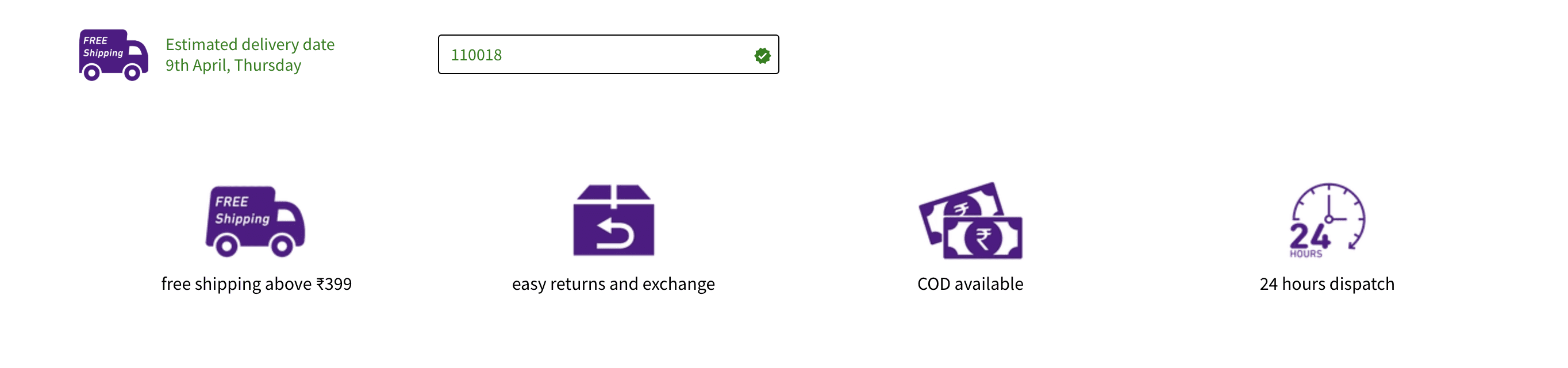
Return, payment, and delivery comfort belong earlier
A lot of brands still push trust too low on the page.
That is a mistake.
returns shown high on the page can lift ATC by up to 15%
showing payment methods on PDP can raise checkout initiation by 8–12%
OTP checks on higher-risk orders can reduce RTO by 34–41%
India’s payment mix also makes this more urgent. UPI made up 85% of payment volumes in H1 2025, based on RBI data reported by LinkedIn-searchable press coverage, so payment comfort is not a minor checkout detail in this market.
Pay with UPI / COD / EMI available
Delivery by Tuesday to Delhi NCR
Easy returns within 30 days
100% payment protection
The trust stack in Indian skincare.
All proof does not carry the same weight.
Trust should be put in this order-
Clinical / dermatological proof
Real customer proof
Lifestyle and aspiration visuals
That means the page should lead with:
active concentration
doctor-backed trust
clinical results
real customer photos / videos
then brand polish
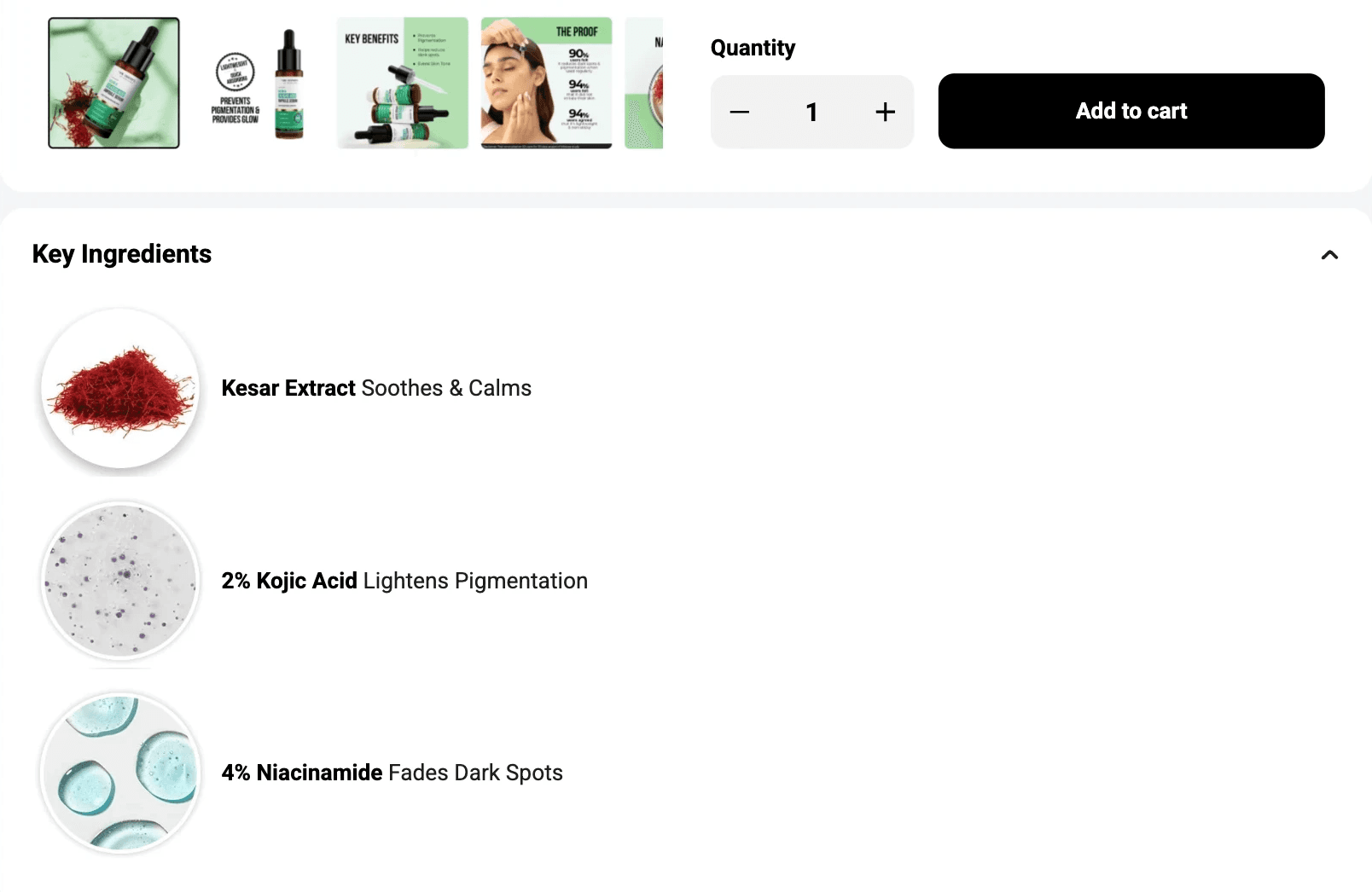
Ingredient clarity does real conversion work.
Ingredient names alone are weak.
The stronger block is:
active
concentration
why this %
who should use it
who should avoid it
what it should not be paired with
Ingredient percentages and forms can improve ATC by 15–25% above ₹1,000, and compatibility guidance can improve routine bundle ATC by 20–30%.
Proof placement matters more than most teams think.
The issue is not just whether you have UGC.
The issue is where it sits.
UGC-heavy beauty ads convert 2–4x higher than polished creative
UGC placement right after benefits and near CTA carries more weight than pushing it to the bottom
real-skin, concern-led videos do better than polished testimonials in Indian skincare.
Put proof in three places:
near the top
after the benefit block
near CTA
A single default PDP leaves money on the table.
India is too mixed for one flat page logic.
Region-specific PDP changes can lift regional ATC by 10–15%. The page read shifts across:
metros
Tier 2 cities
Tier 3+ cities
For metros: faster delivery, clinical backing, stronger premium trust
For Tier 2: value-for-money, clearer reviews, sharper proof
For Tier 3+: payment comfort, simpler reassurance, stronger delivery clarity
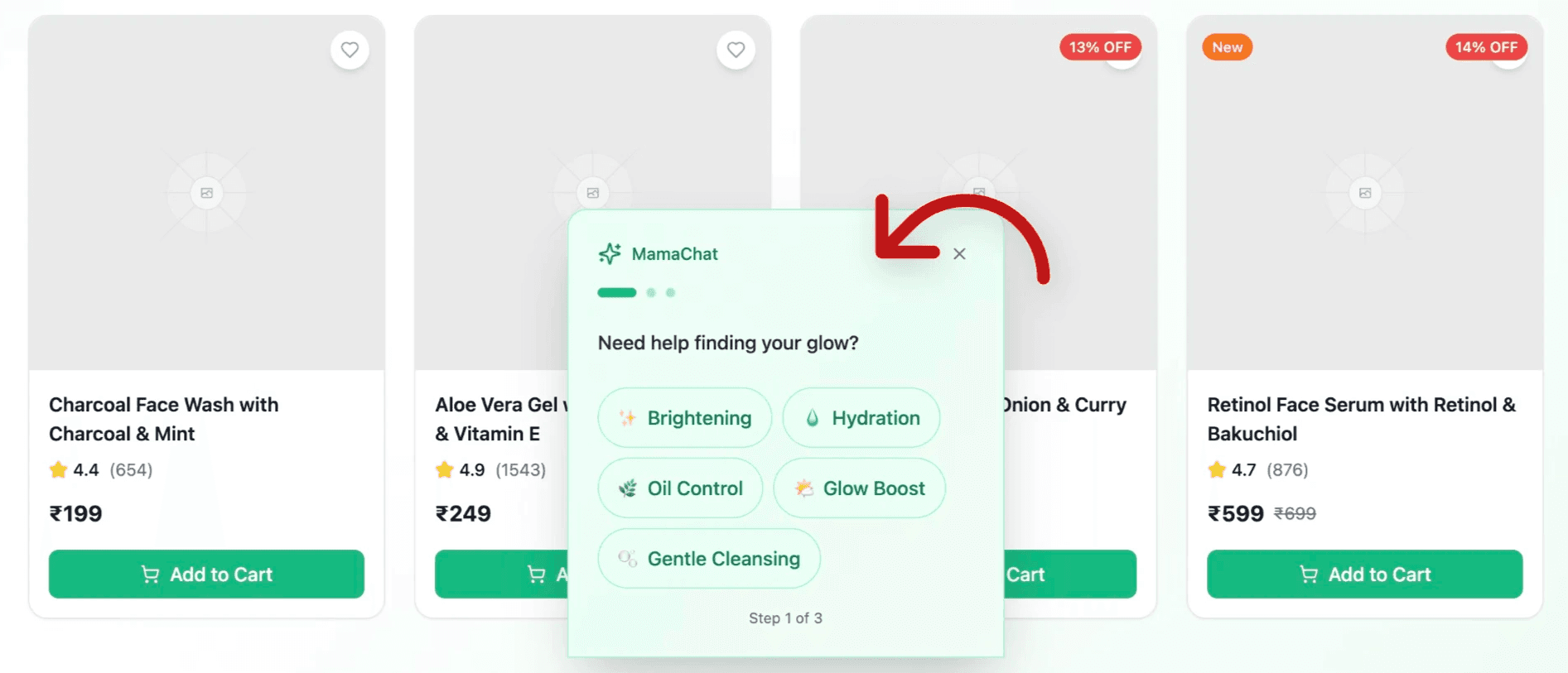
WhatsApp and guided help belong on the PDP.
The highest-converting Indian skincare pages are starting to treat help as part of the page itself.
WhatsApp support placed right before add-to-cart can improve ATC by 8–12% among users who engage.
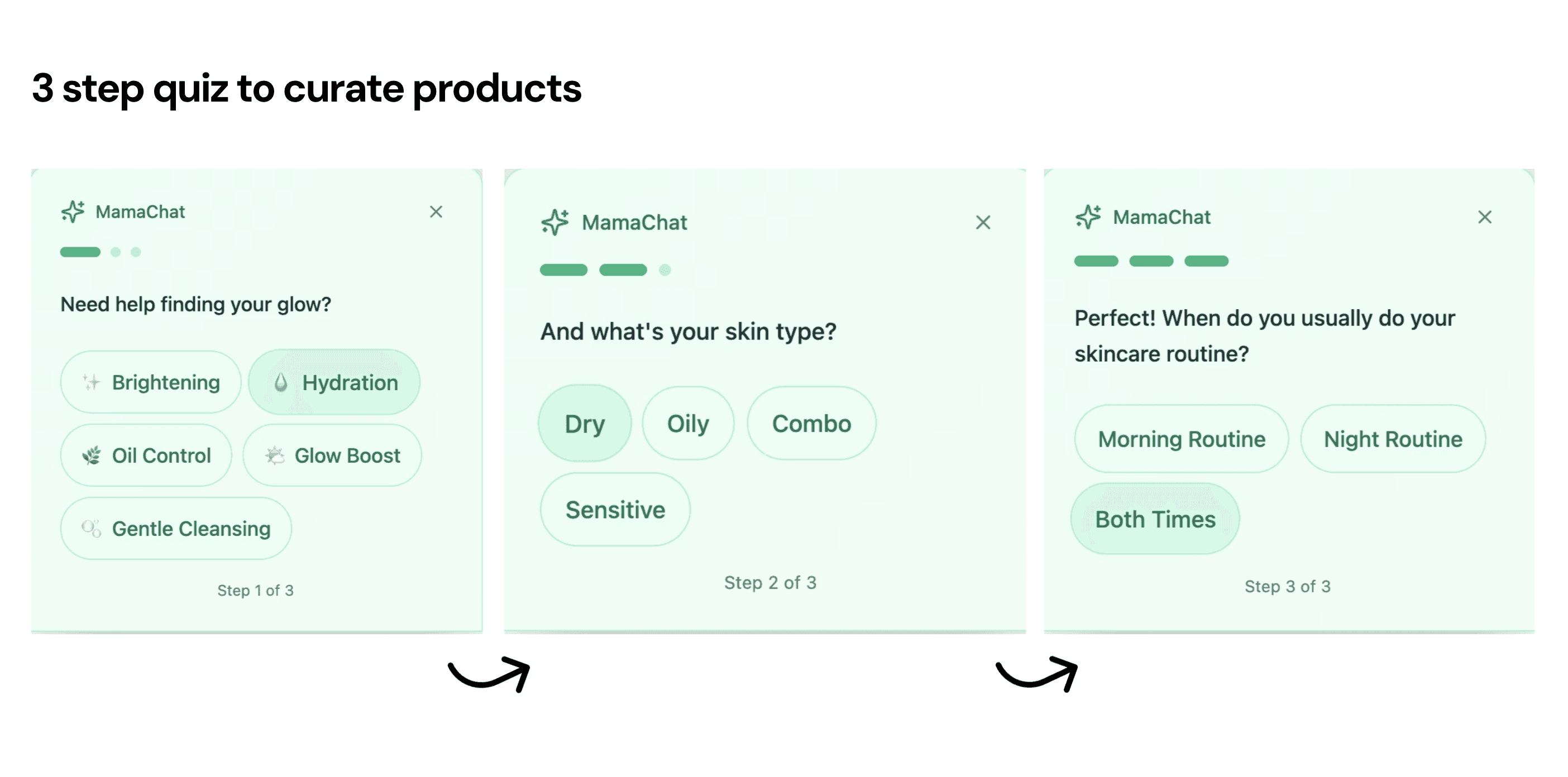
AI-assisted skin diagnostics can improve conversion by 50% and cut return rates by 20–30%, while guided flows can lift quiz completion and recommendation trust.
Guided commerce also lines up with broader beauty behavior shifts. LinkedIn-searchable 2025 reporting on Revieve’s Beauty & Wellness Index says 60–75% of beauty consumers now begin through guided experiences, and those sessions run longer and convert better during peak periods.
What to change in the next 2–4 weeks
Start here:
Add delivery date on PDP
Add ingredient concentration
Move returns higher
Add “not suitable if…” copy
Put testimonials above the fold
Add WhatsApp help before checkout
Expected lift from this block of work: 8–12% ATC increase.
What to build next in 4–8 weeks.
Once the basics are fixed, move to the higher-value layer:
AI skin quiz / guided fit flow
Region-based page versions
Shoppable UGC
Ingredient compatibility matrix
Traffic-source content blocks
Expected lift from this set: 15–22%.
What becomes worth building in 8–16 weeks.
These are the larger bets:
Predictive subscription logic
Dynamic content by behavior
ONDC-linked checkout options
Community-led product validation
Full routine builder
Expected combined lift from this layer: 25–35%, when added on top of the quick wins and medium builds.
The pages doing best in this market usually lean on:
clear information
honest exclusions
real proof
simple page flow
That matters because feature-heavy pages often lose to clarity-first pages in Indian skincare. The opportunity here is not just better design. It is better decision support.